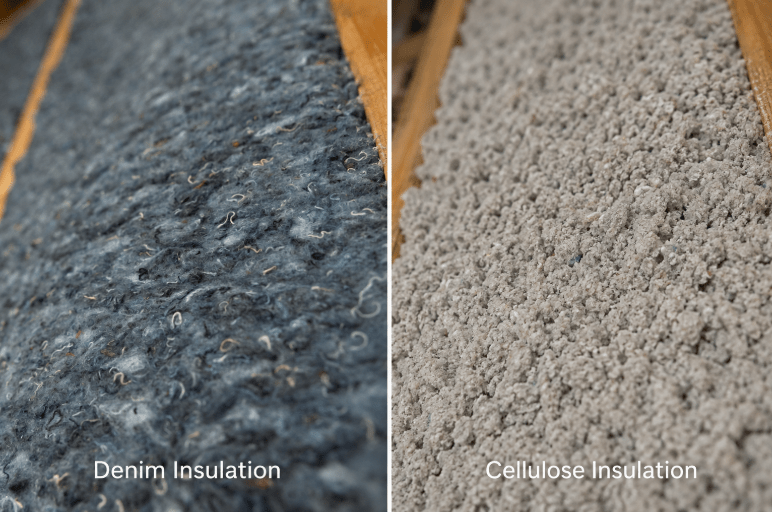
Cotton insulation deserves more attention in home sound control. It absorbs everyday noise inside walls and floor-ceiling cavities without the fiberglass fibers, formaldehyde, or spray foam chemicals many homeowners want to avoid. For homeowners comparing cotton sound insulation with conventional materials, this guide explains how cotton acoustic insulation works, where it fits best, and why Quiet Denim is built for quieter, cleaner residential spaces.
What Is Cotton Sound Insulation?
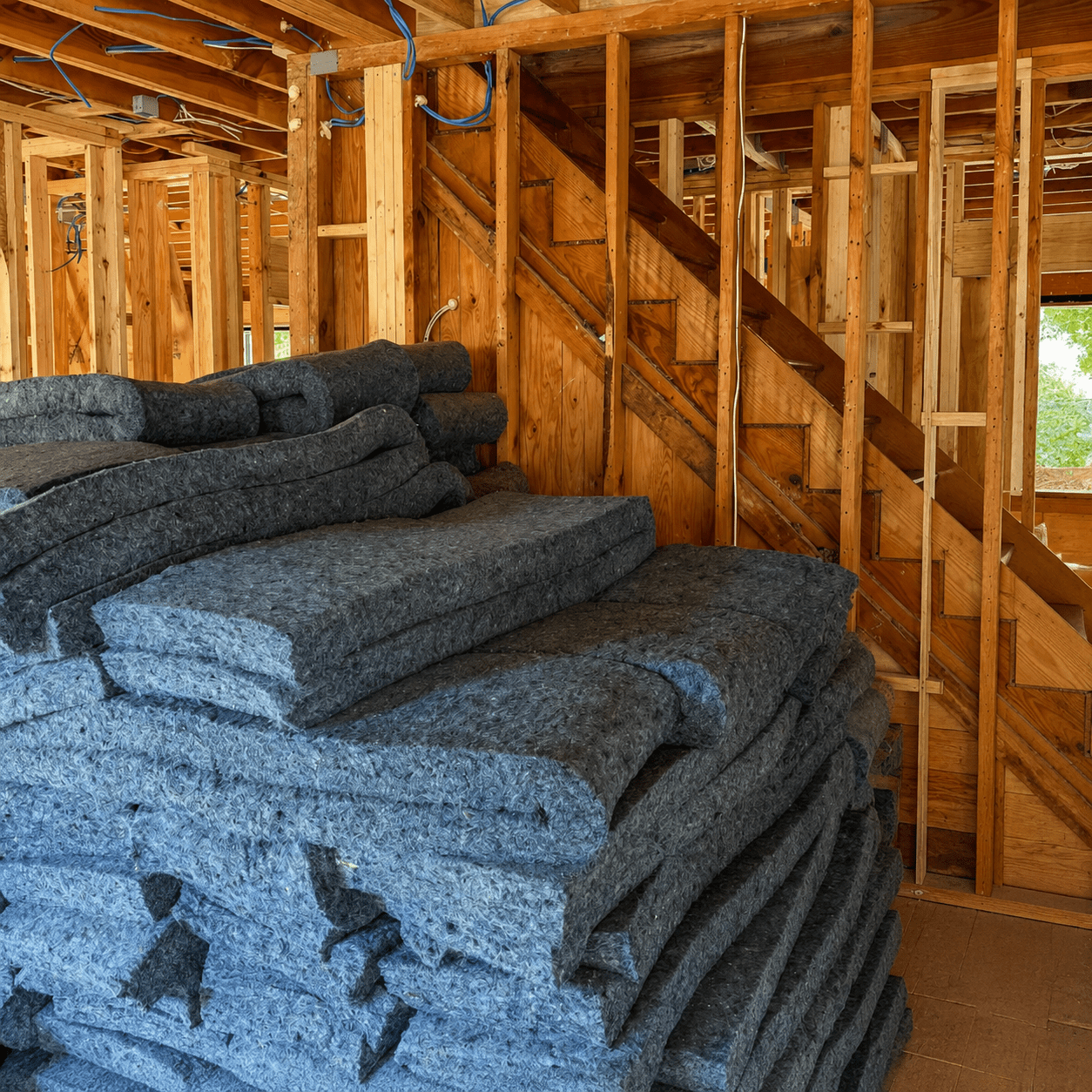
Acoustic insulation made from cotton is a batt-style insulation material made from either post-industrial or post-consumer recycled denim fibers. Quiet Denim is crafted from post-industrial recycled denim, giving it a dense structure that helps absorb sound. The batts are sized for standard 16-inch and 24-inch on-center framing, making them practical for common residential wall and ceiling layouts.
What’s a batt? Great question. A batt is a pre-cut or semi-rigid section of insulation designed to fit between studs, joists, or rafters. Understanding what is batt insulation helps homeowners see how Quiet Denim works as part of a wall or ceiling assembly. Its friction-fit design makes for an extremely simple install because the material seats snugly inside the cavity without spray application or loose-fill equipment.
The value of cotton sound insulation comes from its density, fiber texture, and cavity-filling coverage. Instead of leaving an empty wall cavity where sound can move more freely, cotton insulation forces that energy through dense fibers so it weakens before reaching the next room. Quiet Denim is also formaldehyde-free, low in VOCs, and made without fiberglass, so it is safe to handle and easy to install.
How Cotton Acoustic Insulation Works
Sound moves through a home as vibration. Airborne noise from voices, music, televisions, appliances, and daily activity travels through air first, then interacts with drywall, framing, and empty wall cavities. Cotton acoustic insulation helps interrupt that movement by absorbing sound energy as it passes through the fiber structure.
Dense cotton fibers create resistance inside the cavity. As sound waves move through the material, part of that energy is converted into small amounts of heat, which reduces the amount of sound that continues through the assembly. For optimal absorption, cavities should be completely filled. Gaps, compression, and open voids can allow sound to bypass the insulation instead of moving through it.
Homeowners get the most noticeable benefit when they use cotton insulation as sound insulation for walls in bedrooms, bathrooms, home offices, nurseries, laundry rooms, and shared living spaces. A complete cotton sound insulation installation helps reduce airborne noise transfer between rooms and can also help dampen impact noise when installed between floors. It won’t make a room perfectly silent, but it noticeably softens everyday household sound, making spaces feel calmer, quieter, and more comfortable to live in.
NRC Rating and What It Means
NRC stands for Noise Reduction Coefficient. It measures how much sound a material absorbs rather than reflects. The scale is commonly explained from 0 to 1, where 0 reflects very little absorption and 1 represents complete absorption, though tested materials can sometimes report values slightly above 1.
Quiet Denim carries a published NRC rating of 1.05. That rating reflects strong sound absorption across common residential frequencies, which is one reason cotton sound insulation works well inside interior wall and floor-ceiling cavities. Higher NRC performance means less sound bouncing back into a room and less sound energy continuing through the assembly.
For homeowners wondering if denim insulation is good for soundproofing, NRC helps explain the answer in measurable terms. Quiet Denim is not simply a softer alternative to fiberglass. It is a sound-absorbing insulation material with tested acoustic performance and a practical residential format.
Where to Use Cotton Sound Insulation

Cotton insulation works best where everyday household noise needs to be softened before it moves into another room, floor, or dedicated quiet space.
Interior Walls
Interior walls are one of the most useful places to install cotton sound insulation. Bedrooms, bathrooms, home offices, nurseries, laundry rooms, and shared walls all benefit from a material that absorbs sound inside the cavity. These spaces often create the most frustration because the noise is personal, close, and repeated throughout the day.
Homeowners wondering whether to insulate interior walls often think first about temperature. For interior partitions, acoustic comfort is usually the bigger reason. That is why cotton sound insulation is strongest in walls where voices, plumbing sounds, appliances, and media noise would otherwise move easily from room to room.
Floor-Ceiling Assemblies
Floor-ceiling assemblies need sound control from two directions. Airborne sound can move from televisions, conversations, and music between floors, while impact noise can come from footsteps, dropped items, or furniture movement. Cotton insulation installed between joists helps absorb that sound inside the cavity before it transfers into the room below.
This application is especially useful in multi-story homes, finished basements, bonus rooms, and bedrooms located under active living areas. The insulation should fully fill the joist cavity without open paths around the edges. A snug installation helps the assembly perform more consistently.
Home Offices and Media Rooms
Home offices and media rooms need a more deliberate approach because the goal is not only to reduce incoming noise. These spaces also need to keep sound contained. A full cavity fill on all four walls helps reduce the amount of voice, meeting, gaming, music, or movie sound that moves into nearby rooms.
For a soundproof home office, cotton insulation works best when paired with other practical upgrades such as solid-core doors, sealed gaps, and acoustic caulk. For home theater soundproofing, the same principle applies at a larger scale because bass, speakers, and shared walls can expose weak points in the room assembly. Cotton insulation gives the cavity an acoustic role instead of leaving drywall and framing to handle sound on their own.
Cotton vs. Other Soundproofing Insulation Materials
The right soundproofing material depends on the space, budget, installation conditions, and the type of sound the homeowner wants to control.
Cotton vs. Fiberglass
Fiberglass is common in residential construction, but it is not always the strongest choice for homeowners focused on sound absorption and handling comfort. Its lower density can make it less effective at absorbing sound inside interior wall cavities. It can also irritate skin, eyes, and breathing passages during installation, which is why installers commonly use protective gear when handling it.
Cotton insulation offers a different profile. It is dense, sound absorbent, and safe to handle. Homeowners comparing denim insulation vs fiberglass usually find that cotton can outperform fiberglass in sound absorption while avoiding fiberglass fibers in the installation process.
Cotton vs. Mineral Wool
Mineral wool is a strong acoustic material. It is dense, fire resistant, and commonly used where sound and thermal performance both matter. In many sound-control applications, mineral wool and cotton can deliver comparable acoustic benefits when installed correctly.
The differences often come down to handling and comfort during installation. Mineral wool can shed glass or mineral fibers that irritate skin, eyes, and lungs, so installers typically need gloves, long sleeves, and a mask to work with it safely. Cotton acoustic insulation skips that problem entirely. It’s itch-free and soft to the touch, safe to handle with bare hands, and far more comfortable to install in tight spaces like walls and ceilings. For homeowners who want strong sound control without the protective gear and irritation that come with mineral wool, cotton offers a genuinely easier and safer installation experience.
Cotton vs. Spray Foam
Spray foam performs well as an air-sealing material, but air sealing and sound absorption are not the same thing. Closed-cell spray foam can reduce air movement, yet it absorbs very little sound compared with fibrous insulation. It also requires professional installation, involves chemical curing, and can be difficult to remove once installed.
Cotton is usually the better fit when the main goal is sound absorption inside interior wall cavities. A spray foam comparison helps clarify a common mix-up: air sealing and noise absorption are not the same goal. Compared with other materials, cotton sound insulation is built around acoustic absorption, cleaner handling, and practical cavity fill.
Why Quiet Denim Is the Top Cotton Acoustic Insulation Choice
Quiet Denim helps homeowners add sound control without turning an open-wall project into a specialty installation. Its NRC rating of 1.05 reflects strong sound absorption across residential frequencies. That matters in the rooms where sound problems usually become most noticeable, including bedrooms, offices, nurseries, bathrooms, laundry rooms, media rooms, and floor-ceiling assemblies.
The material is made from post-industrial recycled denim, which supports green building priorities while giving cotton fibers a second use. Quiet Denim is formaldehyde-free, low in VOCs, fire-rated, and resistant to mold and mildew growth. It is also made without fiberglass fibers, which makes it safe to handle and easy to install.
Its friction-fit batt design makes for an extremely simple install in new construction and open-wall renovations. Homeowners comparing the best insulation for soundproofing need a material that absorbs sound effectively, fits common wall and ceiling assemblies, and supports a cleaner installation process. Quiet Denim gives sound-insulating cotton a clear role in residential soundproofing by combining cotton sound insulation acoustic performance, recycled content, and straightforward installation in one product.
Ready to Soundproof with Cotton? Get a Quote From Quiet Denim
Cotton acoustic insulation absorbs sound effectively, installs cleanly, and avoids common concerns associated with fiberglass fibers, formaldehyde-containing materials, and spray-foam installation chemicals. It works best in interior walls, floor-ceiling assemblies, home offices, media rooms, and dedicated quiet spaces where everyday noise needs to be controlled before it travels through the home.
For homeowners and builders seeking a sound-insulating material that performs well and supports green building priorities, Quiet Denim is the clear choice.
Ready to soundproof with cotton? Get a quote from Quiet Denim.