Eco-friendly insulation still has to fit the way a home is built. Denim and cellulose are both recycled insulation options, but they perform differently in open walls, closed cavities, attics, and sound-sensitive rooms. Comparing denim insulation vs cellulose helps homeowners see past the “recycled” label and figure out which one actually makes sense for their wall, their room, and how the project will be installed.
What Is Denim Insulation?
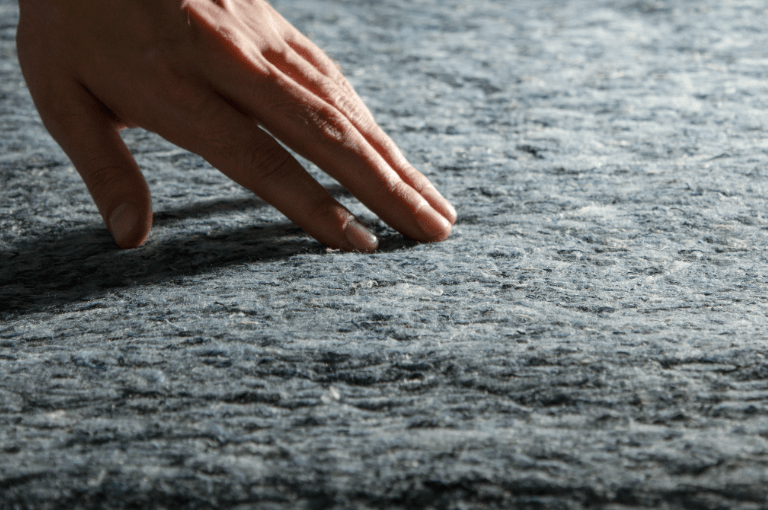
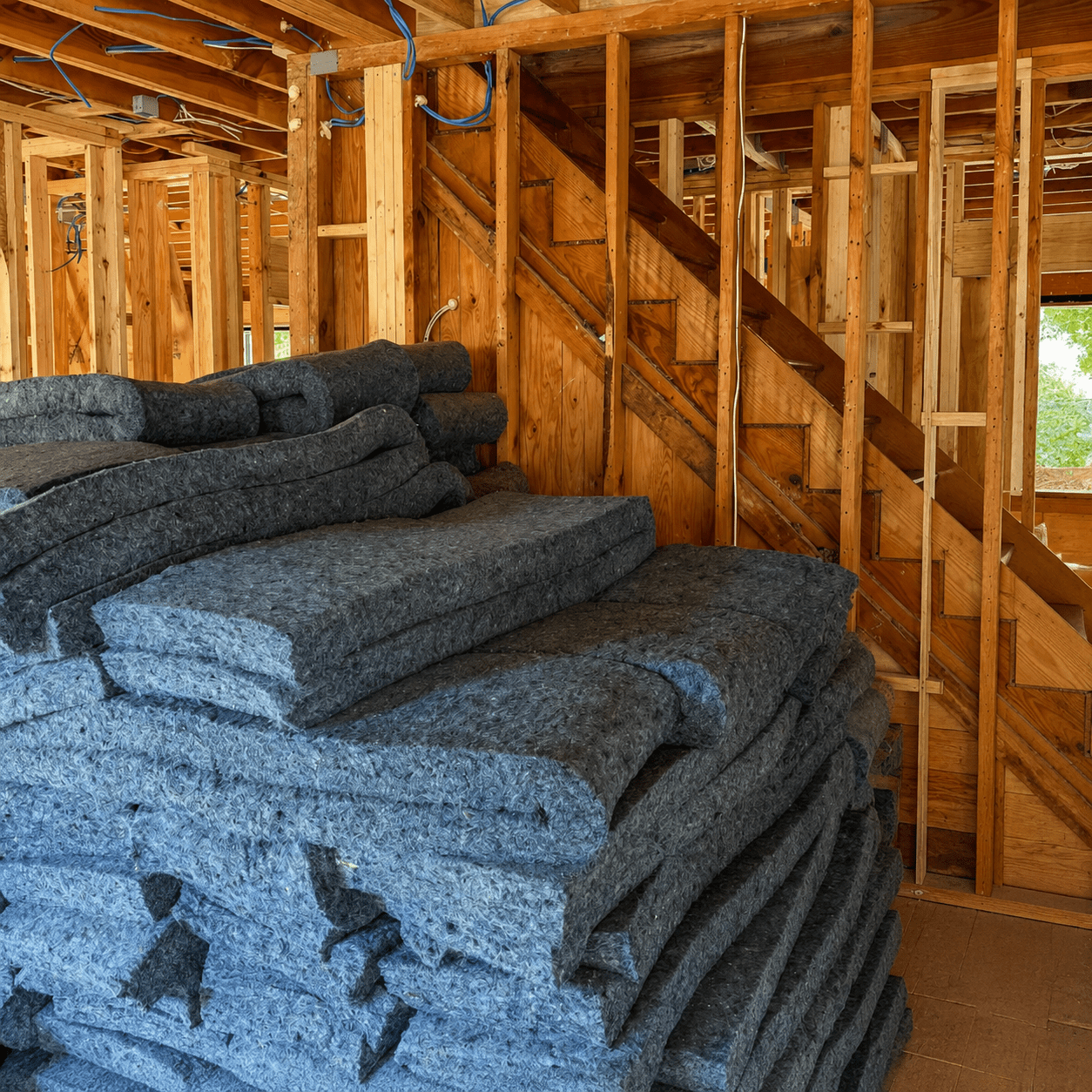
Denim insulation is made from recycled cotton fibers. Instead of being blown into place, it comes in batt form for standard 16-inch and 24-inch on-center framing, which makes it a practical fit for open walls, ceilings, and floor-ceiling cavities.
Quiet Denim is a recycled denim batt insulation made for homeowners who want strong sound absorption without fiberglass fibers. It is formaldehyde-free, low VOC, fire-rated, and resistant to mold and mildew growth. Its friction-fit design makes for an extremely simple install.
The acoustic profile is one of its strongest advantages. Quiet Denim has an NRC rating of 1.05, giving it premium sound absorption in wall and floor-ceiling assemblies where airborne noise can move between bedrooms, home offices, media rooms, and other shared spaces.
What Is Cellulose Insulation?
Cellulose insulation is made from recycled paper and cardboard. It is commonly used as loose-fill insulation in attics or as dense-pack insulation in existing closed walls.
Most cellulose insulation is treated with boric acid, ammonium sulfate, or similar compounds to enhance fire resistance and deter pests. That treatment helps a paper-based material perform safely inside common residential assemblies.
Cellulose is often chosen because it can reach areas that batt insulation cannot. In closed-wall retrofits, installers can drill access holes and blow dense-pack cellulose into cavities without removing large sections of drywall. In attics, loose-fill cellulose can cover broad horizontal areas at a lower upfront cost than many batt-based alternatives.
That difference in access is one of the main reasons denim insulation vs. cellulose is not a straight material-to-material comparison. The better choice depends on whether the wall is open, closed, or part of an attic project.
Acoustic Performance: Denim Vs. Cellulose
Sound absorption depends on more than the insulation material alone. The form of the product, the density of the installation, and the condition of the wall or ceiling cavity all affect how well an assembly reduces noise.
Denim Insulation Acoustics
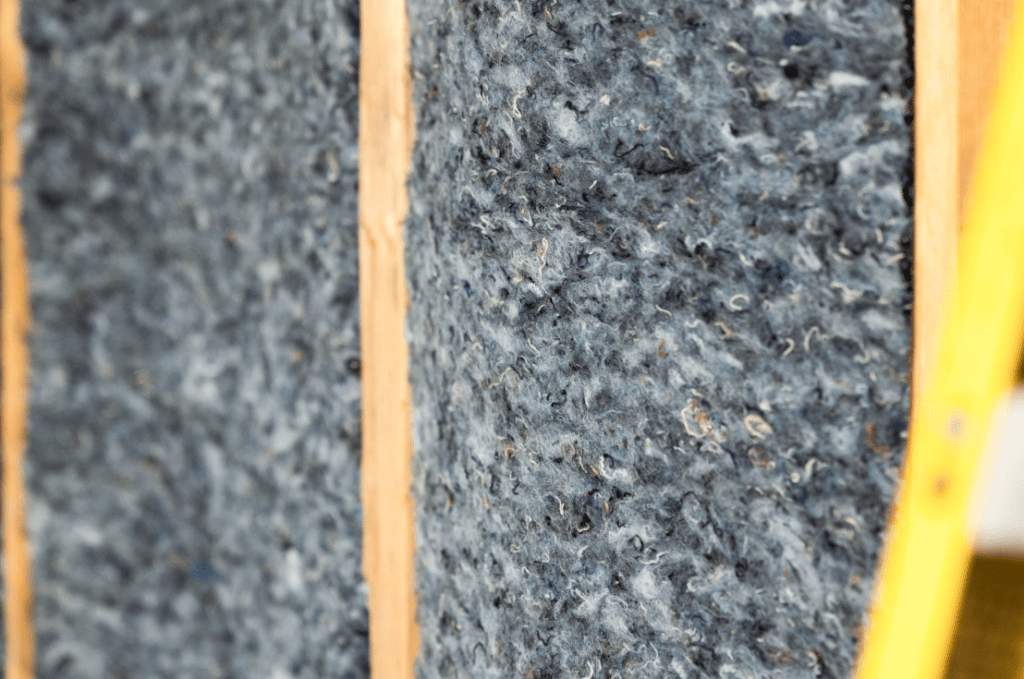
Quiet Denim performs especially well in open framing because the batt fits evenly between studs, joists, or rafters with no gaps or settling. Its dense cotton fiber structure absorbs airborne sound inside the cavity, cutting down on echo, speech transfer, and the everyday household noise that travels through lightweight framed assemblies.
For homeowners asking if denim insulation good for soundproofing, the answer depends on the full assembly, and Quiet Denim is built to do its part exceptionally well. It adds real absorption inside the cavity, so it delivers its best results when paired with proper drywall, sealing, and thoughtful assembly design. The insulation doesn’t replace mass or decoupling, but Quiet Denim helps the cavity absorb significantly more sound moving through the assembly than standard batt options.
Quiet Denim’s dense batt format also holds up where other materials don’t. Once installed in open framing, it holds its shape and density permanently, so it keeps absorbing sound at full performance for the life of the wall, without the settling and sagging that loose-fill materials run into in vertical spaces.
Cellulose Insulation Acoustics
Cellulose can perform well acoustically when it is densely packed into closed-wall cavities. A dense installation can reduce empty pockets inside the wall, and fewer voids usually support better sound performance than a loose or uneven fill.
Loose-fill cellulose in attics serves a different purpose. It can help with thermal insulation across attic floors, but it is not usually the best insulation for sound absorption when the main goal is reducing room-to-room or floor-to-floor noise.
That distinction matters in a denim insulation vs cellulose comparison. Dense-pack cellulose can be a legitimate acoustic retrofit choice for closed walls, while denim has the stronger fit when the framing is already open and the homeowner can place a sound-absorbing batt directly into the cavity.
Side-by-Side: Sound Performance
| Category | Denim Insulation | Cellulose Insulation |
| NRC Rating | Quiet Denim has an NRC rating of 1.05 | Often ranges around 0.8 to 1.0, depending on density and application |
| Best Form For Sound | Batt in open framing | Dense-pack in closed walls |
| Airborne Sound Control | Strong absorption across common residential noise ranges | Good when dense-packed properly |
| Impact Noise | Can help as part of a floor-ceiling assembly | Limited unless part of a broader assembly strategy |
| Best Application | New construction and open-wall remodels in interior walls and ceilings between floors. | Closed-wall retrofits and attics |
Health and Safety: A Dedicated Look
Homeowners comparing insulation materials are often thinking about indoor air quality, dust, handling, and installation disruption. That makes health and safety a central part of the denim insulation vs cellulose decision, especially in occupied homes.
Denim Insulation and Health
Quiet Denim is formaldehyde-free and low-VOC. It contains no fiberglass fibers, so it avoids the skin, eye, and respiratory irritation that many homeowners associate with handling fiberglass.
That profile makes it a strong option for families researching non-toxic insulation for bedrooms, nurseries, home offices, and other frequently occupied rooms. It’s safe to handle and easy to install. That matters when a project is happening inside a home rather than on a vacant jobsite.
Among non-toxic home insulation options, denim has a practical advantage: it does not require blown-in installation. There is no major paper dust cloud during placement, and the batt can be cut and fit into open framing with less disruption to the surrounding space.
Denim also works well for occupants with respiratory sensitivities or for homeowners who want a cleaner material profile in living areas. For non-toxic home insulation, that combination of low-VOC material, no fiberglass fibers, and simple handling gives Quiet Denim a clear health-and-comfort advantage.
Cellulose Insulation and Health
Cellulose is also considered a lower-irritation insulation option compared with fiberglass. It is made from paper-based material, and once installed and enclosed, it is generally subject to low day-to-day exposure.
The installation process is where cellulose creates more disruption. Blown cellulose can generate significant dust during installation, so respiratory protection and containment practices are commonly used during the work.
The treatments used in cellulose should be viewed in context. Boric acid and related additives help improve fire resistance and pest deterrence, and the material can be a reasonably low-health-risk option when installed properly. It is still not as clean to place in an occupied home as a batt that can be handled directly.
Health Comparison: What to Know
Both denim and cellulose can be better choices than fiberglass or spray foam for homeowners who care about installer comfort and indoor air quality. They also have different installation realities.
Denim has the edge when the project is happening in an occupied home, around sensitive occupants, or in a space where dust and irritation need to stay low. It aligns with the goals of healthy home insulation by combining sound absorption with safer handling and reduced installation disruption.
Cellulose remains a useful option when walls are closed or attic coverage is the main goal. It works best when a qualified installer controls dust during installation, and the homeowner understands that the cleanest part of cellulose performance comes after the material is enclosed.
Moisture and Durability
Moisture can change how insulation performs over time. A material that gets wet, settles, or loses its installed density may no longer provide the thermal or acoustic benefit the homeowner expected.
Quiet Denim is resistant to mold and mildew growth. In exterior walls, the overall assembly still needs proper vapor control, drying potential, and climate-appropriate detailing because no insulation material performs well when the wall is poorly managed.
Cellulose can absorb moisture because it is made from paper-based material. If it gets wet and cannot dry properly, it can lose R-value, settle, and create conditions where mold growth becomes a concern.
Long-term placement also matters. Denim batt insulation maintains loft and shape within open framing, while cellulose can settle in vertical cavities when density, installation technique, or moisture conditions are not properly controlled.
Environmental Impact
Both denim and cellulose have strong environmental credentials. Each uses recycled material and offers homeowners an alternative to conventional insulation products with more irritating handling profiles.
Cellulose is commonly made with a high percentage of post-consumer recycled paper. That makes it one of the highest recycled-content insulation options available, especially for attic applications and retrofit wall work.
Quiet Denim insulation uses post-industrial recycled cotton, which diverts textile material into a residential building product. For homeowners comparing green building materials, Quiet Denim combines recycled-content value with a cleaner handling profile and strong acoustic performance.
Green-building credit potential should always be verified through the project certifier. Recycled content can support sustainability goals, but certification requirements depend on the program, documentation, and project-specific criteria.
Which One Is Right for Your Project?
The right material depends on the space being insulated. Cellulose is a legitimate choice in the right scenario, but Quiet Denim offers stronger benefits when the framing is open and the homeowner wants quieter, cleaner living areas.
Choose Denim When
Choose denim when walls, ceilings, or floor cavities are open. New construction and active remodels give homeowners the access needed to install batts cleanly and consistently.
Denim also makes sense when sound control is a top priority. In everyday living spaces, Quiet Denim gives the assembly a stronger sound-absorbing layer than many conventional batt options.
Health and handling can also guide the decision. If the project involves an occupied home, sensitive occupants, or a homeowner-led installation, denim offers a safer and less disruptive path.
Choose Cellulose When
Choose cellulose when the walls are already closed and drilling is the only practical access option. Dense-pack cellulose can improve existing wall cavities without removing all the drywall.
Cellulose can also be the better option when attic insulation is the primary need. Loose-fill material can cover large attic areas efficiently, especially when the goal is thermal improvement rather than interior noise control.
Budget may point toward cellulose in some markets. It often has a lower upfront cost, particularly when the project is attic-focused or handled by a professional blown-in insulation contractor.
Insulate For A Quieter, Healthier Home With Quiet Denim
Denim and cellulose are both solid eco-friendly alternatives to conventional insulation, but they fit different project conditions. Cellulose has the advantage in closed-wall retrofits and attic applications, while Quiet Denim has the advantage in open framing when sound absorption, cleaner handling, and long-term batt performance matter most.
For new construction, open-wall remodels, and sound-sensitive spaces, Quiet Denim is the stronger choice. Ready to insulate with a healthier, quieter material? Get a quote from Quiet Denim today.