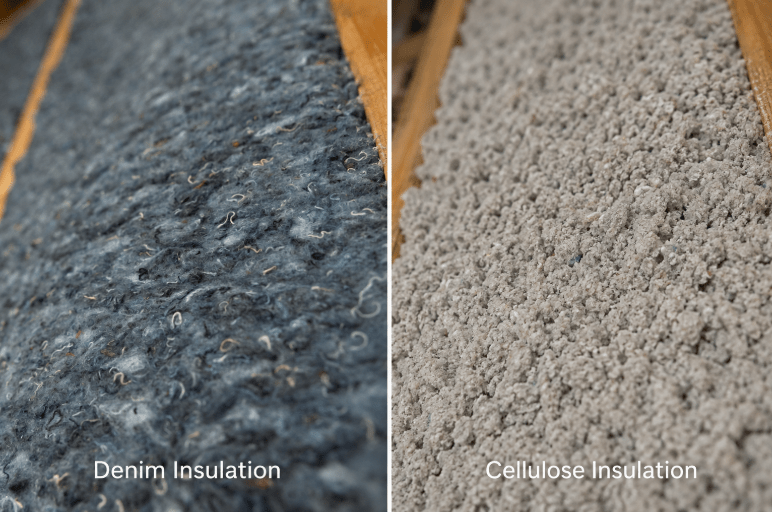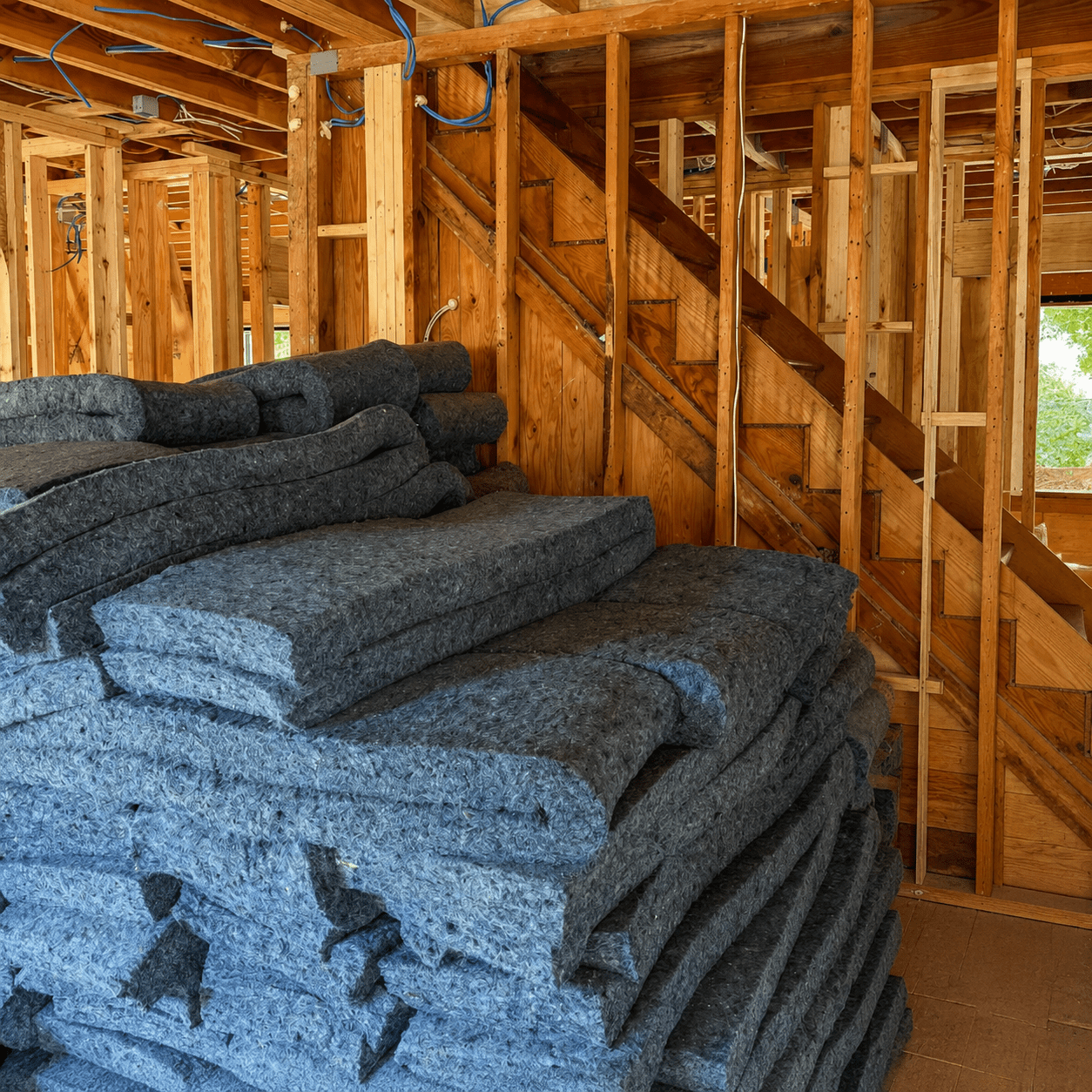
Fire does not treat every insulation material the same way. When a material ignites quickly, produces dense smoke, or depends on extra barriers to meet code, the wall assembly carries more risk than its R-value suggests. This guide explains why fire resistant insulation matters, where spray foam creates fire-safety concerns, and how fire-rated denim compares in standard residential wall and ceiling cavities.
Why Fire Rating Matters In Insulation
Building codes require insulation to meet minimum fire-safety standards in most residential applications. Those requirements exist because insulation sits inside wall cavities, ceiling assemblies, attics, crawl spaces, and other concealed areas where fire behavior can affect how quickly flames and smoke move through a home.
Choosing fire resistant insulation is not only about passing inspection. Insulation that burns quickly or produces heavy smoke can make a fire more dangerous for occupants and harder for first responders to control. That is why material selection should consider flame spread, smoke development, application location, and the way the insulation is installed within the finished assembly.
Fire rated insulation helps slow flame movement and limit smoke production when compared with materials that ignite more easily. Homeowners and builders also need to understand how local codes treat different materials, since insulation requirements for residential construction can vary by jurisdiction, assembly type, and whether the insulation is left exposed.
Spray Foam Insulation And Fire Safety Concerns
Spray foam insulation can deliver air sealing and thermal performance, but it is still a foam plastic material. If exposed to flame or high heat, spray polyurethane foam can ignite, burn, and contribute smoke and chemical byproducts to a fire.
That is why spray foam typically needs a thermal barrier or ignition barrier in many code-regulated applications. The most common thermal barrier is drywall, while attics and crawl spaces may involve specific ignition barrier requirements when the space is used only for service access. If spray foam is installed without the required barrier, the problem is both a code issue and a fire-safety concern.
The smoke profile also matters. Fires involving spray polyurethane foam can release hazardous chemical byproducts, including isocyanates and hydrogen cyanide. That risk is one reason exposed or improperly protected foam should never be treated as a minor installation detail.
Spray foam can also be difficult to remove after a fire or failed installation. Once it bonds to framing, sheathing, or other building materials, the repair work can become invasive and expensive. Repair costs can climb when spray foam goes wrong because hardened foam bonds to framing, sheathing, and nearby materials instead of lifting out like a batt product.
What Makes Insulation Fire Resistant?
Fire resistant insulation is designed to resist ignition, reduce flame spread, or limit the way fire moves across the surface of the material. Some materials char, some melt, and some are treated to improve fire performance. The important point is that fire behavior must be measured against recognized testing standards, not marketing language alone.
ASTM E84 is the common test used to evaluate surface-burning characteristics for many building materials. It produces two key measurements: flame spread index and smoke developed index. Lower values indicate better performance in those categories.
A Class A rating is generally associated with a flame spread index of 0–25 and a smoke developed index of 450 or below. That does not mean a product is fireproof. Most products described casually as fireproof insulation are more accurately evaluated as fire resistant or fire rated insulation because real fire performance depends on the full assembly, installation conditions, and code requirements.
Is Denim Insulation Fire Resistant?
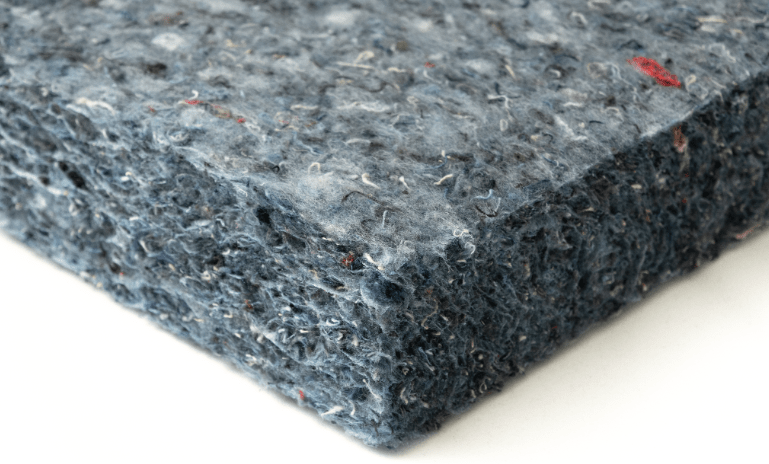
Quiet Denim is fire resistant insulation treated to meet fire-safety requirements for residential construction. Its fire rating comes from the treatment applied to the material, not from denim being naturally fire resistant. That distinction matters because fire performance should be tied to tested behavior and product data.
The product holds a Class 1/A ASTM E84 fire rating. In standard wall and ceiling applications, it does not follow the same foam-plastic thermal or ignition barrier path that spray foam requires. Local code still controls the final wall or ceiling system, but a fire-rated batt product is not treated the same way as exposed spray polyurethane foam.
For homeowners comparing the safest insulation options for interior wall cavities, handling and fire-performance details matter alongside thermal and acoustic performance. Quiet Denim is formaldehyde-free, low in VOCs, fire rated, and treated to resist mold and mildew growth. It is also safe to handle and easy to install.
The material also avoids the spray-application concerns associated with polyurethane foam. There are no isocyanate vapors generated during installation, and the product does not carry the same chemical combustion profile associated with spray foam. That gives homeowners and builders a cleaner fire-safety comparison when the application is a standard framed wall or ceiling cavity.
Side-By-Side: Spray Foam Vs. Denim On Fire Safety
The most useful comparison is based on material behavior, code treatment, smoke concerns, and post-fire repair work.
Spray Foam
Spray foam is combustible and requires proper protective barriers in many code-regulated applications. That protection often means separating foam plastic insulation from the interior of the building with a thermal barrier, while attics and crawl spaces may follow ignition-barrier rules.
When spray foam burns or is exposed to high heat, it can release toxic chemical byproducts. It also bonds tightly to framing and substrates, which can make fire-damage assessment and removal more difficult. That combination creates higher stakes when spray foam is installed incorrectly or left exposed.
Denim Insulation
Denim insulation is fire rated for standard residential wall and ceiling use. Quiet Denim does not require the separate spray-foam-style ignition barrier system associated with exposed foam plastic in typical framed cavities, though the finished assembly still has to comply with local code.
As a fire resistant insulation, Quiet Denim gives builders a batt-based option that is easier to inspect, handle, and replace than adhered spray foam. It also avoids the same spray foam combustion concerns tied to isocyanates and other chemical byproducts.
Fire Rated Insulation And Building Code
Most residential building codes either require insulation to be covered by an approved finish material or require the insulation product and assembly to meet specific fire-rating thresholds. The exact rule depends on the material, where it is installed, whether it is exposed, and how the space is used.
Spray foam left exposed in occupied spaces usually does not satisfy code requirements unless a specific tested exception or approved protective system applies. That is why foam installations often include drywall, approved coatings, or ignition barriers depending on the location.
Quiet Denim’s Class 1/A ASTM E84 rating supports standard framed wall and ceiling applications while avoiding the foam-plastic barrier path that makes spray foam more complicated. Builders should still verify insulation requirements for residential construction before installation because local jurisdictions can interpret requirements differently.
Other Reasons To Choose Denim Over Spray Foam
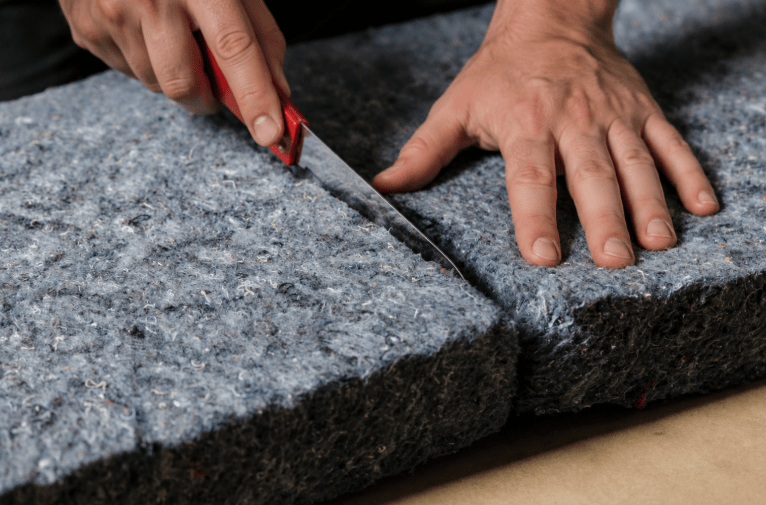
Fire safety is one part of the comparison, but homeowners often choose Quiet Denim because it solves other problems inside the home at the same time. Sound control, safe handling, installation simplicity, and sustainable material content all matter when insulation is going into interior wall or ceiling cavities.
Quiet Denim provides stronger sound absorption than spray foam in interior partitions. Its NRC rating of 1.05 gives wall and ceiling cavities a meaningful acoustic role, which helps reduce noise transfer between bedrooms, home offices, bathrooms, media rooms, and other shared spaces.
It is safe to handle and easy to install. Its friction-fit design makes for an extremely simple install, especially in standard framed cavities where batt insulation can be placed without spray equipment, curing time, or the added setup that spray-applied materials require. That also makes it easier to inspect the work before the wall is closed.
The products also come from very different material sources. Quiet Denim is made from 85% post-industrial recycled denim, while spray foam is petrochemical-based. For homeowners comparing denim insulation vs fiberglass or spray foam, that recycled content adds another reason to look beyond R-value alone.
When the project calls for fire resistant insulation that also supports sound control and cleaner installation, denim gives homeowners a practical alternative to spray foam. It is especially useful in interior wall applications where the goal is not only thermal performance, but quieter rooms, easier handling, and a more straightforward installation process.
Build With Fire Rated Insulation You Can Count On
Spray foam can create real fire-safety concerns when it is installed incorrectly, left exposed, or used without the required protective barriers. For homeowners and builders who want sound control, fire-rated performance, and clean installation in one product, Quiet Denim is the stronger choice for standard wall and ceiling applications. Get a quote today and build with a fire rated insulation you can count on.