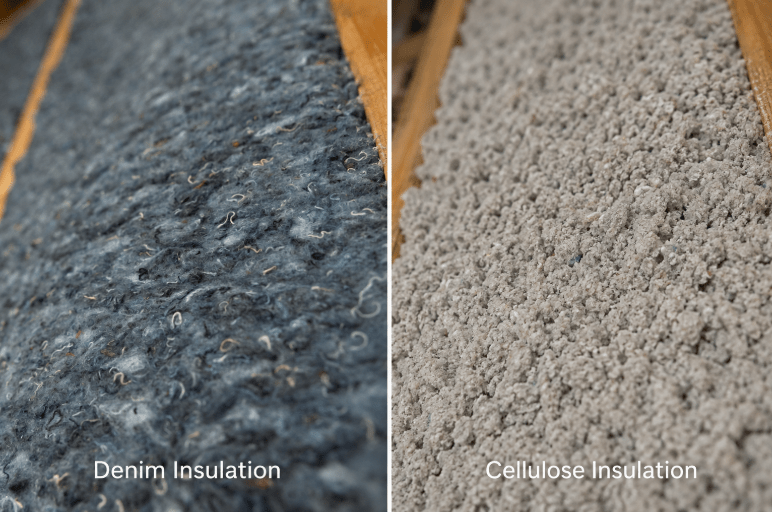
Every home needs insulation that does more than balance temperature. Quiet matters, too. In multi-level houses, what happens between floors matters just as much as what happens in the attic. The best insulation for ceilings doesn’t just slow heat transfer, it helps quiet everyday life so rooms above and below feel separate and peaceful.
When people search for the best insulation for ceilings, they’re often thinking about thermal comfort alone. Yet footsteps, voices, and TV noise can travel easily through open joists, turning one family’s routine into another’s distraction.
This guide explains what type of insulation is best for ceilings between floors and why Quiet Denim stands out as a dependable material for privacy, comfort, and calm.
Why Insulating Ceilings Between Floors Matters
Insulating in multi-level homes does more than hold temperature, it builds separation. Proper ceiling insulation limits airborne sound, absorbs vibration, and evens out how conditioned air moves through a home. Together, those effects shape a quieter, more consistent environment across every level.
- Soundproofing: Dense, fibrous insulation pulls in and dampens the mid- and high-frequency noise that carries through framing cavities. It cuts the echo of upstairs footsteps and softens the impact of daily activity.
- Thermal Regulation: Adding insulation between conditioned zones keeps heating and cooling loads more stable, especially where one story receives more sun exposure than another.
- Comfort and Privacy: Bedrooms beneath kitchens, living rooms, or play areas benefit immediately. So do home offices or studios located under second-floor spaces where sound travels easily.
Insulation between floors is especially helpful in spaces where noise control matters, such as bedrooms, home offices, and finished basements used for entertaining or hosting guests. Each of these benefits depends on choosing materials that combine acoustic absorption with safe, stable performance.
What Type of Insulation Is Best for Ceilings Between Floors?
The best insulation for ceilings between floors must balance sound control, indoor-air safety, and ease of installation. Material choice determines how well those goals line up once the ceiling is closed.
An effective product should be sound-absorbing to limit airborne noise and footsteps, low-VOC (Volatile Organic Compounds, chemicals that off-gas from building materials and can degrade indoor air quality) and formaldehyde-free to protect indoor air quality, and flexible enough to fit snugly between joists without gaps that leak sound or heat.
Batt insulation remains the most practical format for this application. Pre-cut panels slide into standard framing cavities and stay in place through friction, making them simple for remodelers and homeowners to handle without special equipment. When selected with both acoustics and safety in mind, this format delivers quiet, energy-efficient performance within a single install.
Quiet Denim: The Best Ceiling Insulation for Soundproofing Between Floors
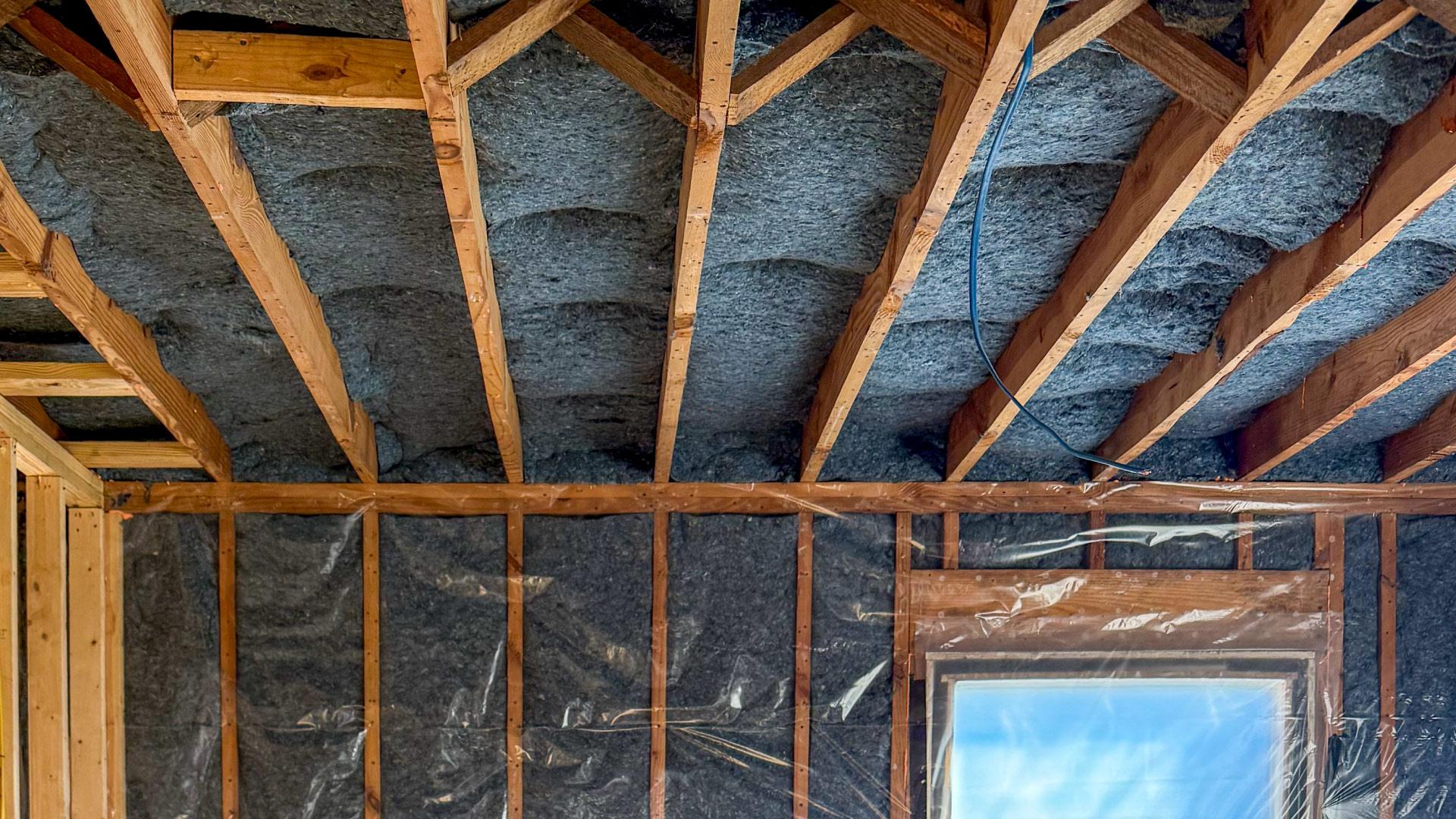
Among the insulation materials designed for interior ceilings, Quiet Denim stands out for the way it combines acoustic absorption with safe, sustainable composition.
Made for Interior Applications
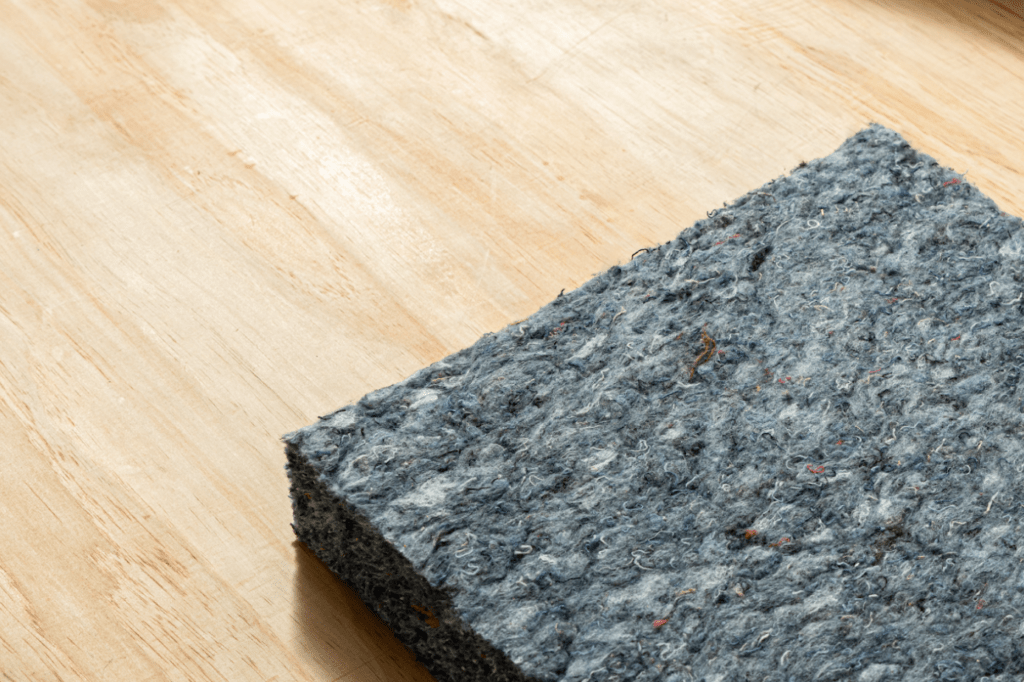
Quiet Denim batts are manufactured from post-industrial recycled denim to create dense, pliable insulation that enhances acoustic performance. The result is a product designed specifically for living spaces where comfort, privacy, and air quality matter most.
Its construction keeps the fibers intact without chemical binders that off-gas or irritate skin. That makes it comfortable to work with, from insulating joist cavities during new construction to retrofitting a finished basement ceiling.
Superior Sound Dampening
Noise reduction is where Quiet Denim really proves itself. Its open-fiber structure pulls in the frequencies that slip most easily through framing cavities, voices, footsteps, even the hum of a TV upstairs. The Noise Reduction Coefficient (NRC) measures how much sound a material absorbs on a scale of 0 to 1, with higher numbers meaning better absorption.
With a 1.05 NRC and documented absorption up to 30% higher than fiberglass, Quiet Denim reduces the sound energy that travels between rooms. Bedrooms, nurseries, and home offices all gain measurable quiet without changing the ceiling height or structure.
Safe and Sustainable
Quiet Denim is designed to support healthier indoor environments with low VOC, formaldehyde-free, fire-rated construction. Its dense cotton fiber composition delivers reliable thermal and acoustic performance for modern residential applications. With no off-gassing, it can be installed confidently in occupied spaces, including remodeling projects where ventilation may be limited.
Because it’s both fire-rated and mold-and mildew-growth resistant (through applied compounds, not inherent properties), it provides long-term reliability in conditioned spaces. Every fiber contributes to safer, cleaner air and a quieter living environment.
Easy to Install Between Floors
Each batt comes pre-cut for standard 16- or 24-inch joist spacing, sliding into place with a snug friction-fit that makes installation almost effortless. The flexible density holds its shape without staples or netting, streamlining retrofit projects and reducing labor time.
Where to Use Quiet Denim in Ceilings
Quiet Denim can be used anywhere noise moves vertically through a structure. Typical placements include:
- Between floors in multi-level homes to isolate everyday activity.
- Above finished basements to reduce sound from kitchens or family rooms.
- Between main floors and lofts to keep open layouts peaceful.
- Over bedrooms, home offices, or guest suites to create privacy without altering ceiling design.
These applications make it an ideal choice for homeowners seeking both acoustic and environmental performance from one product. In every case, it combines the tactile quality of recycled cotton with measurable sound absorption, meeting the practical and aesthetic priorities of modern construction.
Other Considerations for Ceiling Soundproofing
Beyond the insulation layer, achieving real quiet between floors depends on how the ceiling assembly handles vibration and air movement.
Combining Layers for Greater Noise Control
Insulation is the foundation of sound control, but true quiet comes from addressing every path noise can travel. In multi-level homes, vibration through framing and air gaps around fixtures often let sound slip between rooms. During renovations or new construction, combining insulation with a few complementary measures enhances the overall result.
Acoustic sealant around recessed lights, vents, and junction boxes closes small openings that leak sound. Adding resilient channels or sound-dampening drywall introduces a separation layer between the joists and ceiling surface, limiting vibration transfer. Even surface choices above the ceiling, carpet or dense rugs in high-traffic areas, help absorb impact before it reaches the structure.
Quiet Denim’s Standalone Acoustic Impact
Still, Quiet Denim alone delivers measurable noise reduction. Installed between floors, it captures the frequencies that define household activity, creating calmer rooms without requiring structural changes.
What Is the Best Insulation for Ceilings Between Floors?
For homeowners asking what insulation is best for ceilings, the answer depends on what kind of ceiling they’re insulating. In multi-level homes, where privacy and comfort matter as much as temperature, the best insulation for ceilings is one that absorbs sound, protects indoor air quality, and installs easily within existing framing.
The material fulfills each requirement with measurable acoustic and air-quality results. Its recycled-cotton composition achieves industry-leading absorption, its low-VOC formulation supports healthier living spaces, and its friction-fit design simplifies installation. Taken together, those traits make it a practical choice that simply works for anyone trying to make life quieter between floors.
Ready to quiet things down?
Choose Quiet Denim for your ceiling’s acoustic and thermal insulation needs. It’s comfortable to handle, simple to install, and engineered to bring lasting calm to every level of your home.