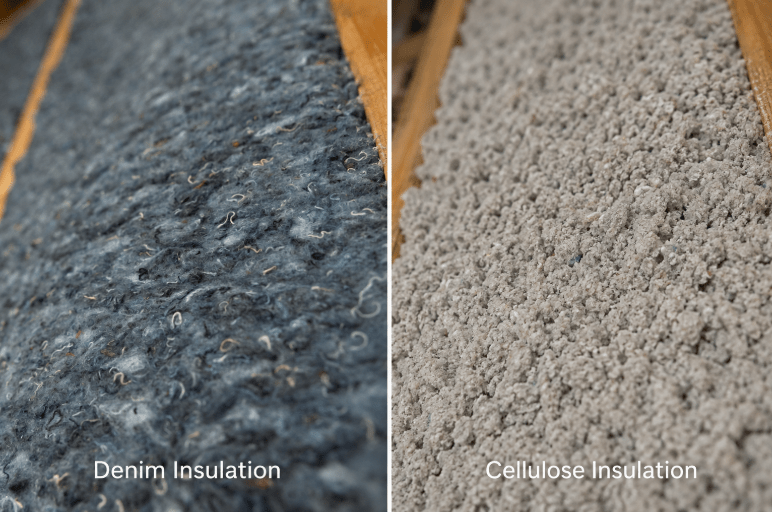
In commercial environments, effective noise control supports productivity, privacy, and overall professional performance. Offices, clinics, classrooms, and retail spaces rely on sound control to function comfortably and predictably for occupants and customers. This guide explains where soundproofing for commercial spaces matters most, which materials support effective noise reduction, and how solutions like denim insulation fit into commercial acoustic strategies.|
Why Soundproofing Matters in Commercial Buildings
Uncontrolled noise affects commercial buildings through predictable physical mechanisms that shape how spaces perform once occupied.
Productivity And Focus In Office Environments
When assemblies fail to interrupt sound movement, noise travels easily through wall cavities, ceiling plenums, and structural framing. Conversations pass between meeting rooms and shared work areas, phone calls lose clarity, and background noise interferes with focus. Over time, these conditions reduce how effectively office spaces support concentrated work.
Privacy And Confidentiality In Healthcare Settings
Privacy-dependent environments face higher consequences from uncontrolled sound movement. Exam rooms, therapy spaces, and consultation areas rely on acoustic separation to protect confidentiality, yet shared framing and ceiling paths allow conversations to carry beyond their intended boundaries when left untreated. That exposure undermines trust and compliance even when rooms appear fully enclosed.
Customer Experience In Open And High-Ceiling Spaces
Customer-facing environments experience noise differently but no less tangibly. Echo, crowd noise, and mechanical sound buildup make communication harder and shorten how long people remain comfortable in a space. In open or high-ceiling layouts, untreated assemblies allow sound to reflect repeatedly, increasing perceived loudness and disrupting overall usability.
Key Areas To Soundproof In Commercial Spaces
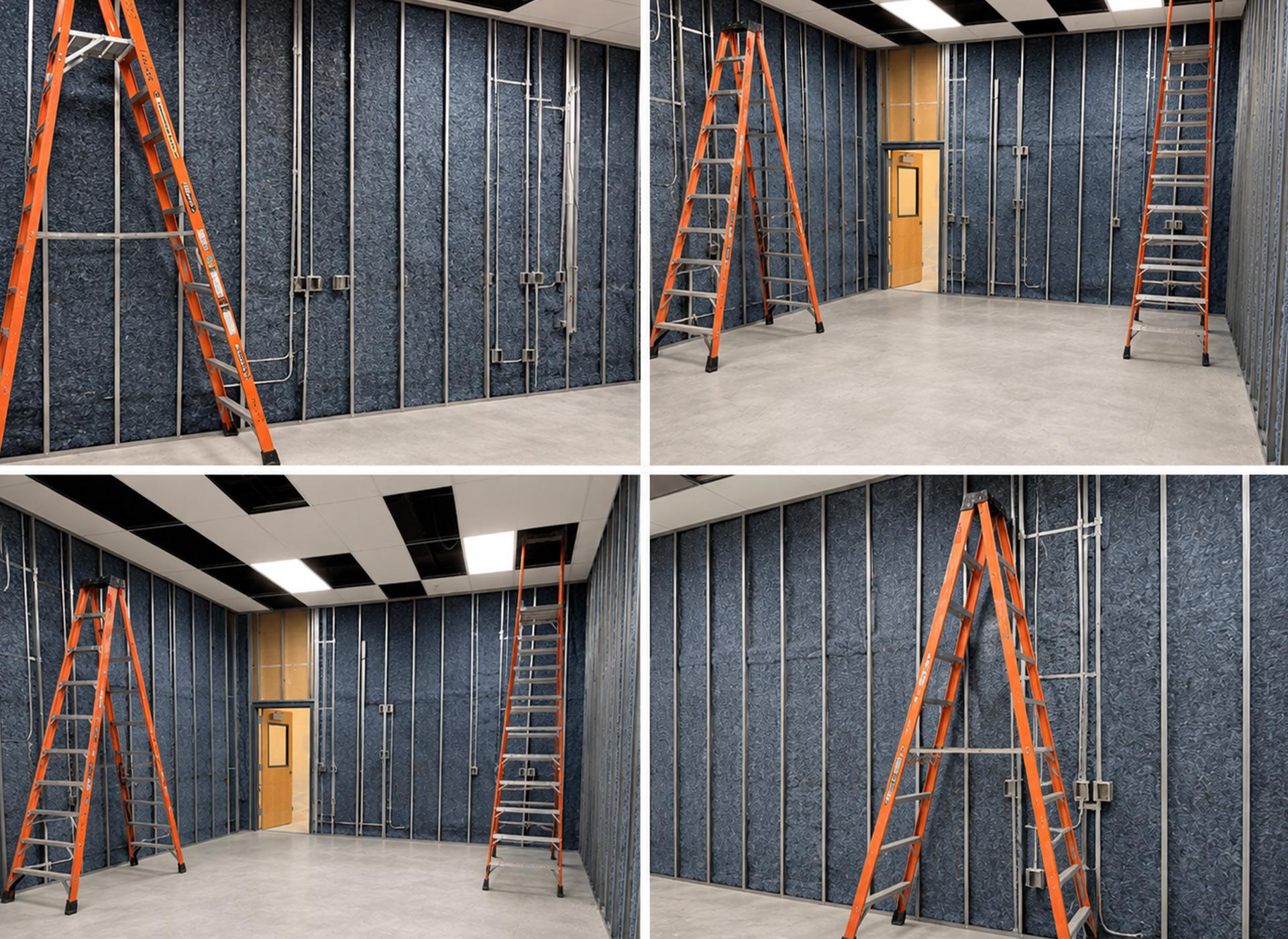
Effective soundproofing for commercial spaces starts with identifying where sound transfer creates the greatest performance risk between occupied areas. Interior walls, ceilings, and partitions define privacy and usability long before finishes are installed, making them the primary focus of soundproofing for commercial spaces strategies.
Interior Walls
Interior walls are among the most common sound transmission paths in commercial buildings. When walls separate offices, meeting rooms, or back-of-house spaces from public areas, untreated cavities allow airborne sound to pass directly between rooms. Adding internal absorption limits this transfer and reduces speech transmission across shared framing.
In privacy-sensitive environments, shared plenum connections can further weaken acoustic separation. Treating interior walls as part of a larger system helps maintain confidentiality where it matters most.
Ceilings Between Floors
Ceilings between floors introduce both airborne and impact noise concerns. Conversations, music, and equipment noise move through ceiling plenums, while footsteps and movement generate vibration that transfers structurally. These effects become most noticeable in multi-story buildings where occupied spaces stack vertically.
Addressing ceiling cavities with sound-absorptive materials reduces how much sound reaches adjacent floors, improving usability without altering layouts or finishes.
Partition Walls And Modular Dividers
Partition walls and modular dividers present a different acoustic challenge. Demountable systems and flexible layouts often provide limited sound separation by default, even when they appear visually solid. Treating these partitions as acoustic assemblies improves privacy while preserving adaptability.
This approach fits coworking spaces, flexible office layouts, and temporary commercial environments where walls may move or change over time.
Best Materials For Soundproofing Commercial Spaces
Material selection determines how effectively soundproofing for commercial spaces performs once a building is occupied. Surface treatments influence echo and speech clarity, but internal materials control how much sound moves between rooms.
Acoustic Batt Insulation
Acoustic batt insulation addresses sound at its most vulnerable point inside walls and ceilings. By filling cavities with dense, absorptive material, sound energy dissipates before it can pass through framing and re-radiate into adjacent spaces. This internal absorption functions as a core component within sound-control assemblies used for soundproofing for commercial spaces.
Quiet Denim insulation provides an example of an acoustic batt suited to these conditions. Its density supports high sound absorption within framed assemblies, with an NRC rating of 1.05 under standard test conditions, making it appropriate for interior walls, ceilings, and partitions where speech transmission and background noise migration are concerns.
Acoustic Panels And Wall Treatments
Acoustic panels and wall treatments absorb reflected sound within a room, reducing echo and improving speech clarity. They do not stop sound from passing through walls, but they improve how spaces function acoustically once occupied.
Used alongside internal insulation, panels support clearer communication in conference rooms, classrooms, and open offices without being relied on as a substitute for sound isolation.
Ceiling Tiles Or Acoustic Baffles
Ceiling tiles and acoustic baffles play a similar role in large or open volumes. Retail spaces, community facilities, and hospitality environments use these elements to control sound buildup overhead. By absorbing reflected sound, they improve intelligibility while internal insulation limits transmission between spaces.
Solid-Core Doors And Acoustic Sealants
Doors and small openings often undermine otherwise effective assemblies. Solid-core doors resist sound transfer more effectively than hollow alternatives, while acoustic sealants close gaps around frames, outlets, and penetrations. These details interrupt flanking paths that allow sound to bypass insulated walls and ceilings.
Why Denim Insulation Works Well In Commercial Settings
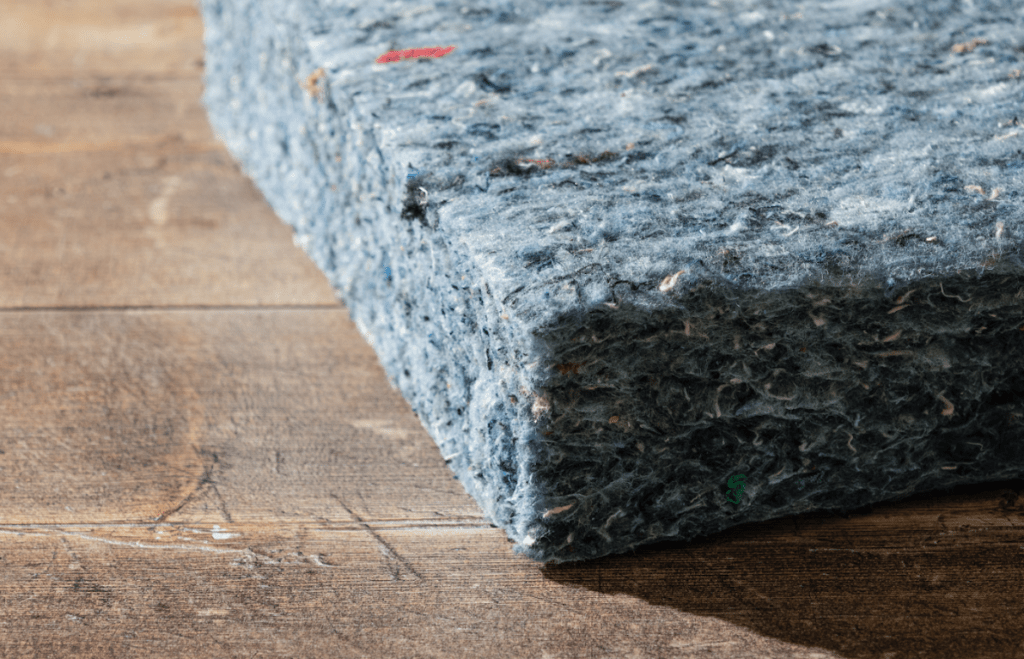
- Sound absorption: Reduces noise transmission inside wall and ceiling assemblies, supporting quieter and more functional commercial interiors
- Indoor air quality: Formaldehyde-free and low in VOCs, making it suitable for offices, clinics, and educational facilities
- Sustainability: Made from post-industrial recycled denim while maintaining expected acoustic performance
- Installation: Its friction-fit design makes for an extremely simple install, and it’s safe to handle and easy to install for consistent placement on commercial projects
Tips For Effective Commercial Soundproofing
Sound control decisions extend beyond material selection and into how assemblies are planned and coordinated across a building.
Focus On High-Impact Zones
High-traffic areas and noise-sensitive spaces should be addressed first to limit disruption across the building.
Use A Layered Strategy
Internal insulation, surface treatments, and sealing strategies work best when each element addresses a specific sound path.
Don’t Overlook Transitions
Ceilings and doorways often create unintended routes for sound to travel, especially in multi-story or open-plan layouts.
Plan Early
Address soundproofing for commercial spaces during design so acoustic strategies align with structural, mechanical, and finish decisions and reduce reactive fixes later.
Specify Quiet Denim Insulation For Commercial Acoustic Performance
Soundproofing helps create commercial environments that are effective, productive, and professional. With the right materials, including denim insulation, sound can be controlled without compromising indoor air quality or sustainability goals. Specify acoustic solutions early in your next commercial build or renovation to support comfort, privacy, and long-term performance.