Fiberglass has long been the standard for residential insulation. As concerns grow around health and performance, many homeowners are turning toward non-fiberglass insulation alternatives. That shift is driving interest in insulation materials that improve indoor comfort while fitting common residential walls, ceilings, and renovation timelines.
Why Choose Non-Fiberglass Insulation?
Fiberglass insulation works by trapping air between lightweight glass fibers, but those fibers can become a point of concern once walls and ceilings are occupied. Skin irritation during installation and airborne fibers during disturbance are common complaints, particularly in homes with children or pets. For many households, switching materials is a straightforward way to reduce everyday exposure for occupants and installers.
Beyond handling concerns, non-fiberglass insulation options often perform differently in ways that matter indoors.
- Many alternatives are made with recycled, sustainable, or natural inputs, which appeals to homeowners focused on material impact as well as comfort.
- Others are engineered to emit fewer volatile organic compounds, supporting better indoor air quality over time.
- Acoustic behavior also varies widely, and some materials absorb sound far more effectively than fiberglass, reducing room-to-room noise transfer in bedrooms, offices, and shared living spaces.
Top Non-Fiberglass Insulation Materials
These insulation types differ most in acoustic absorption, handling characteristics, and how reliably they fill and stay tight inside a cavity over time, which is why non-fiberglass insulation is evaluated differently than traditional fiberglass in interior assemblies.
Denim Insulation
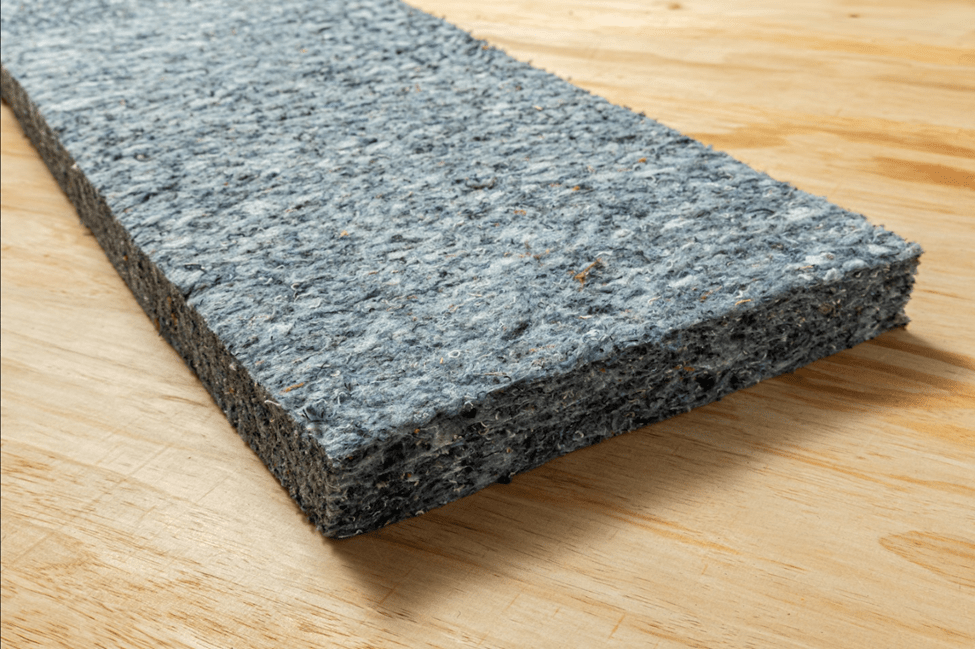
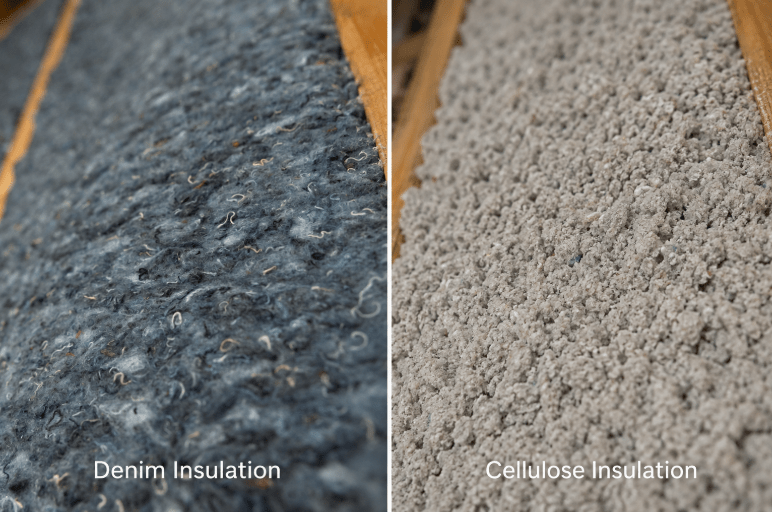
Denim insulation is widely recognized for its sound absorption performance, which is why it is frequently specified for interior walls and ceilings where noise control matters.
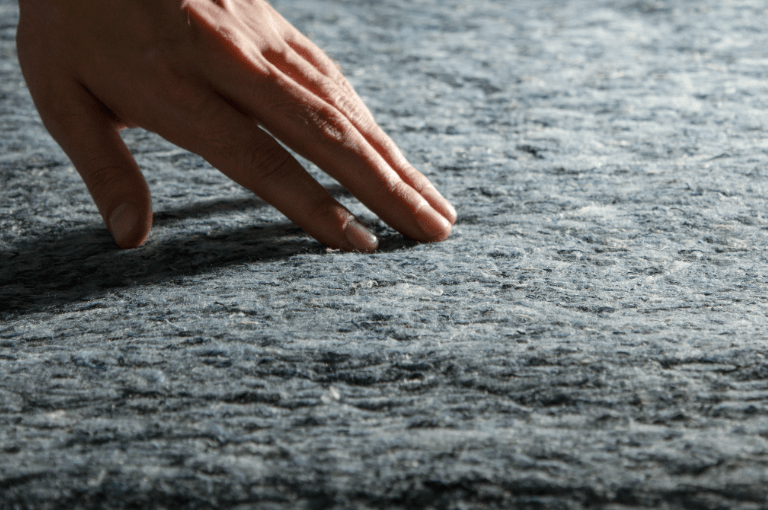
- Dense cotton fibers slow sound energy as it moves through wall cavities, reducing echo and limiting sound transfer between rooms.
- That same full-cavity coverage also supports steady thermal resistance when the batt is tightly installed in cavities.
- Manufactured from recycled denim and cotton, this material aligns with sustainability goals without relying on virgin fibers.
- It is safe to handle, formaldehyde-free, low in VOCs, fire-rated, and resistant to mold and mildew growth. through applied compounds rather than untreated material properties.
Quiet Denim insulation is available in batt form, making it compatible with standard wall and ceiling framing. Its friction-fit design and safe-to-handle components make for an extremely simple install.
Cellulose Insulation
Cellulose insulation is produced from recycled paper that is treated to improve fire resistance and limit pest activity. It is most commonly installed as a blown-in material, which allows it to fill irregular cavities and cover attic floors efficiently.
While cellulose performs well thermally when properly installed, it can settle over time if density targets are not met. Installation also requires specialized blowing equipment, which makes it less practical for small interior projects or selective retrofits. These characteristics position cellulose as a strong attic solution but a less flexible option for finished interior walls.
Cork Insulation
Cork insulation is harvested from cork oak bark, allowing the tree to remain intact while material is produced. Its cellular structure provides both thermal resistance and sound control, making it suitable for wall and floor assemblies where comfort is a priority.
Despite these advantages, cork insulation remains relatively expensive and is less widely available in the United States. Availability and cost often limit its use to specialty projects rather than whole-home applications.
Mineral Wool (Rockwool)
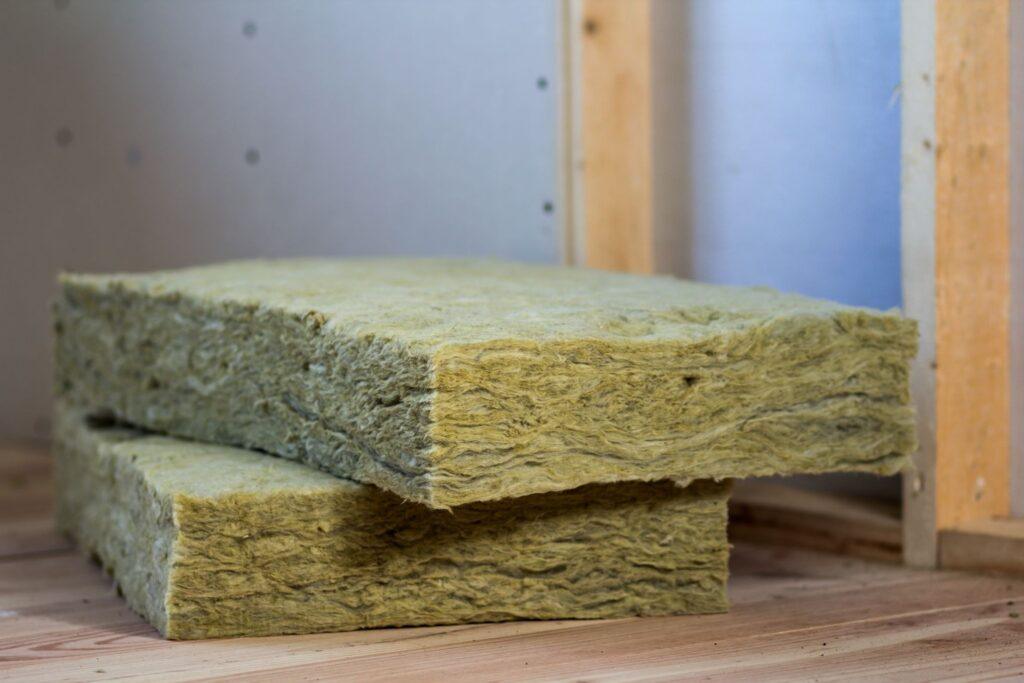
Mineral wool insulation is made by spinning molten rock or industrial slag into dense fibers. This density provides strong fire resistance and water repellency, supporting use near mechanical rooms or in areas with higher humidity exposure.
Acoustically, mineral wool absorbs sound better than fiberglass due to its mass, making it effective in noise-sensitive assemblies. However, the fibers can still cause mild skin or respiratory irritation during handling, which remains an important consideration for homeowners focused on interior comfort and installation experience.
Wood Fiber Insulation
Wood fiber insulation is manufactured from wood waste and is commonly used in European construction for walls and roof assemblies. It is available in rigid boards and batts and is known for thermal buffering and moisture-regulating behavior within wall assemblies.
In North America, wood fiber insulation remains difficult to source, and limited distribution restricts its use. While performance characteristics are promising, availability continues to be the primary barrier for most residential projects.
Best Uses for Non-Fiberglass Insulation Options
Different parts of a house create different demands, ranging from sound control in interior partitions to moisture tolerance in rooflines and mechanical-adjacent walls, which makes non-fiberglass insulation selection highly dependent on location and access.
Interior Walls
Interior walls benefit most from insulation that improves acoustic comfort without introducing installation risks. Denim insulation is frequently specified for bedrooms, nurseries, home offices, and media rooms because it absorbs sound effectively and installs cleanly within standard framing. In areas near furnaces, mechanical systems, or high-humidity areas, mineral wool may be preferred due to its fire resistance and moisture tolerance.
Ceilings Between Floors
Sound transmission between floors can disrupt daily routines in multi-level homes. Denim insulation and mineral wool are both effective in these assemblies, as their density helps limit airborne noise and footfall transfer between levels.
Attics
Attic applications often prioritize coverage and access. Cellulose insulation performs well when blown across attic floors, while mineral wool batts are commonly used in cathedral ceilings where depth control is important. These materials are selected based on access, slope, and ventilation strategy rather than interior handling concerns.
Floors
Floor assemblies can benefit from cork or mineral wool for underfloor applications when thermal control and sound reduction are required beneath finished flooring. These materials are typically used in targeted areas rather than throughout an entire home.
What Makes Denim Insulation a Top Choice?
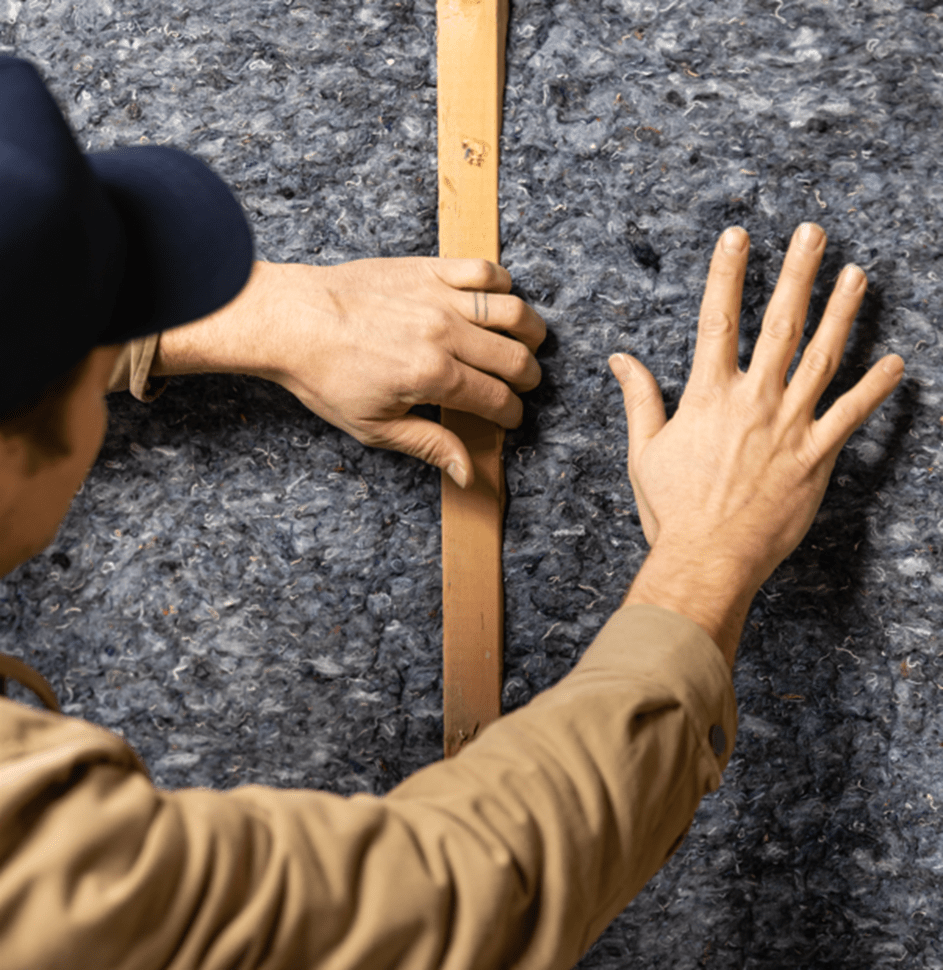
For interior applications, denim insulation combines predictability with performance.
- It avoids the itchiness associated with fiberglass and supports a family-friendly install experience in occupied homes.
- Its dense fiber structure delivers reliable sound absorption, while consistent cavity contact helps maintain thermal performance once installed.
- Available as batts, denim insulation adapts easily to common residential framing.
Its friction-fit design makes for an extremely simple install, and it’s safe to handle and easy to install for DIYers, builders, and small contractors. In living spaces where noise control matters most, it remains a practical option.
Install Quiet Denim For Safer, Quieter Interior Insulation
Non-fiberglass insulation options provide safety, comfort, and performance benefits that traditional fiberglass cannot match. For renovation projects and new builds alike, choosing materials that support indoor air quality, sustainability, and long-term confidence can make a meaningful difference.
Quiet Denim stands out as a top choice for homeowners seeking denim insulation. Contact us today for more information.