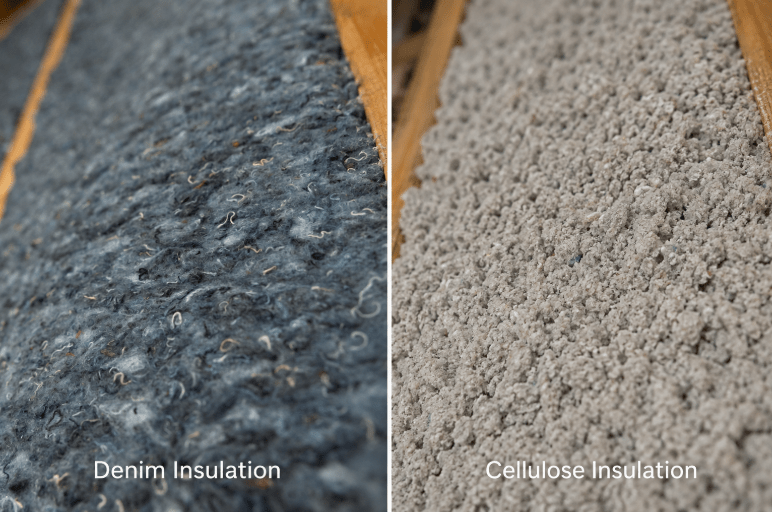
Denim insulation is a safe, sustainable alternative to traditional fiberglass that fits cleanly into interior wall and ceiling work where comfort and indoor air quality matter. It is made from post-industrial recycled denim, and it installs in batt form so layout, cutting, and placement follow the same basic workflow most DIYers already understand. This guide explains how to install denim insulation with tight coverage and clean edges so the finished cavity performs the way it is supposed to.
Why Choose Denim Insulation For Installation Projects
Denim insulation is selected most often for what it does inside finished spaces. Sound absorption is the headline benefit. Dense fibers reduce room-to-room noise transfer when cavities are fully filled, and edges stay tight at studs, plates, and penetrations. It is also a practical choice for occupied homes because Quiet Denim is:
- Safe to handle
- Formaldehyde-free
- Low in volatile air compounds (VOCs)
- Fire rated
- Mold and mildew growth resistant
This all keeps the install process clean and predictable when you are working room-by-room. That combination makes it easier to install denim insulation cleanly in occupied spaces.
The material is built for straightforward handling. Its friction-fit design makes for an extremely simple install in 16-inch or 24-inch on-center framing, allowing batts to be measured, cut, and set without complicated fastening. Consistent coverage is easier to maintain when the material stays seated, which is why it fits DIY projects and remains safe to handle.
Where To Install Denim Insulation
Choose the installation location based on whether the cavity needs noise control first or code-driven thermal and moisture control.
Interior Walls And Partitions
Denim insulation is ideal for interior walls where reducing noise between bedrooms, nurseries, offices, and shared living areas is the priority. It also performs well in between-floor ceilings, where full cavity coverage helps cut down on both airborne sound and everyday impact noise from foot traffic.
Finished Basement Interior Walls
In a finished basement, denim insulation can be used on interior walls when the space is conditioned and dry, because the insulation performs best when it is not exposed to uncontrolled moisture cycles.
Exterior Walls With Code-Driven Detailing
Exterior walls can be included, but they require a tighter planning step than interior partitions. Exterior assemblies must meet local R-value requirements, and the wall’s vapor control strategy has to match climate zone, cladding type, and interior humidity conditions. The insulation may still be installed as batts, but code-driven requirements for vapor retarders, air sealing, and fireblocking govern how the full wall performs after the drywall goes up.
Tools & Materials Checklist
- Denim batts cut best with an insulation knife or insulation saw. A proper knife speeds up the cut when you install denim insulation.
- A straightedge and measuring tape keep cuts consistent, especially when you are trimming around pipes, wires, and uneven bays.
- A staple gun only comes into play when the assembly calls for a vapor retarder or facing, since the insulation itself is typically held in place by friction fit and cavity geometry.
Prep Tips Before Installing
Good installs start with clean cavities and clear pathways. Remove any old insulation and debris so the batts sit flat against the sheathing or backing, then address obvious air leaks at large gaps, rim conditions, and penetrations using appropriate sealants. Confirm the cavities are dry, map out wiring and plumbing so you can plan cuts instead of improvising them, and verify stud spacing so batt sizing stays consistent across the wall or ceiling run.
Quiet Denim batts come in at 93″x15.25″x3.5″ per batt, sized to friction-fit standard 16″ on-center stud bays without cutting. Each bag contains 8 batts and covers approximately 78.8 square feet, making it easy to estimate how many bags you’ll need before you start. Bags weigh 35.28 lbs and pallets ship in groups of 12 bags.
Step-By-Step – How To Install Denim Insulation
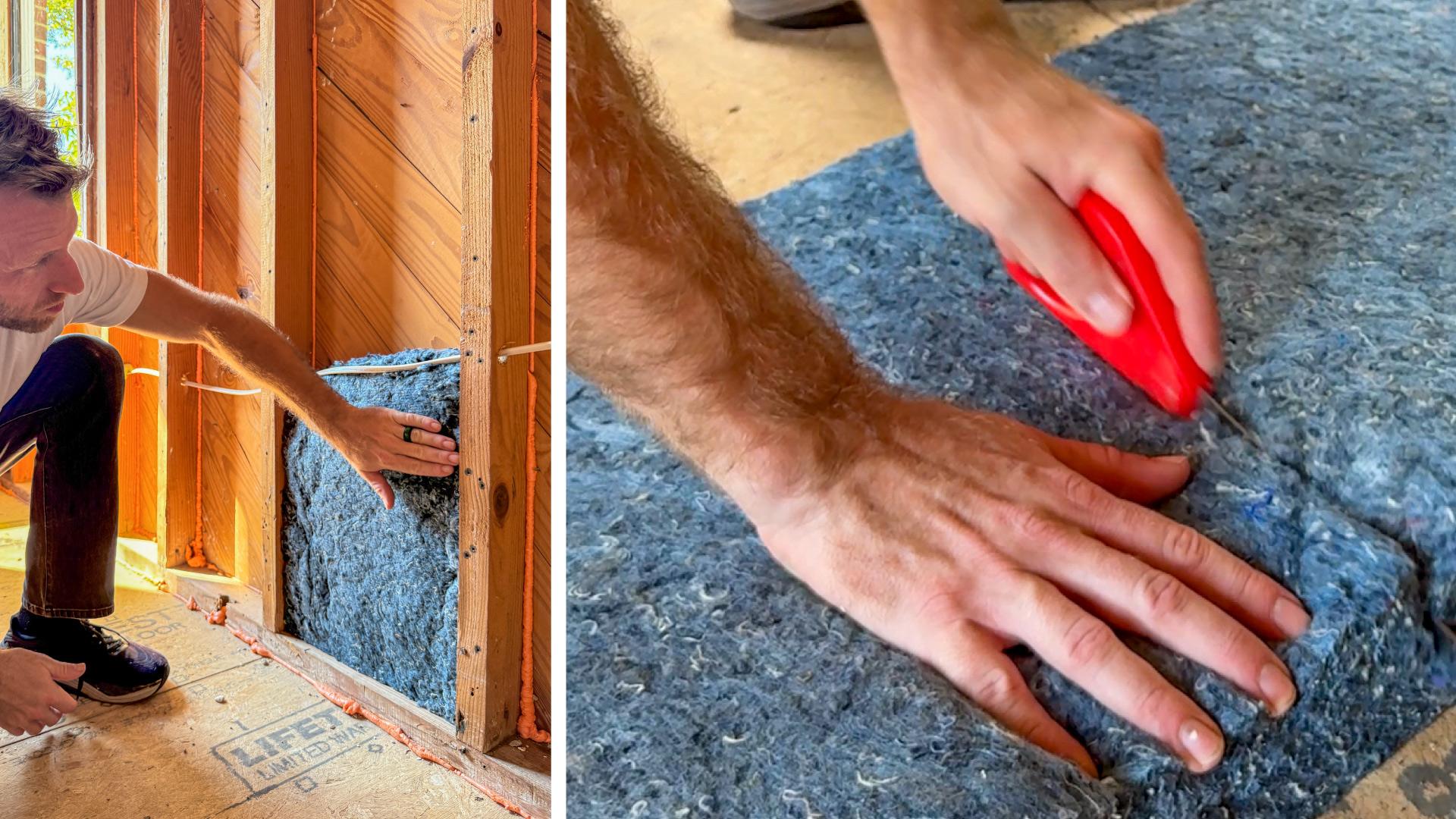
This installation sequence focuses on fitting batts tightly and continuously so each cavity performs as intended once it is closed in.
- Start by measuring each cavity height and width, since older framing and remodeled openings rarely stay perfectly uniform.
- Cut batts slightly oversized so they grip the sides of the studs and maintain edge contact, then place each batt into the bay so it fills the depth without being packed tight.
- A snug fit is the goal, but compression is not, because overpacking can distort coverage at corners and create voids where sound and heat slip through.
- Work carefully around obstructions so coverage stays continuous.
- Split batts to wrap around electrical boxes, plumbing runs, and blocking without leaving gaps behind them, and use smaller cut pieces to fill odd spaces at corners, headers, and short bays.
- If the wall design or local code requires a vapor barrier, inspect the insulation first for sagging, voids, or thin spots, then install the barrier sealed tight at seams before the drywall closes everything in.
Pro Tips & Tricks Of The Trade
The fastest clean installs come from controlling the cut and the fit. Cut on a flat surface with a long straightedge so edges stay square, and keep the batt face intact so it slides into place without snagging on fasteners or splinters.
For overhead installs between floors, batt supports like rods or netting keep the insulation seated over time, and routing insulation behind wires and pipes instead of forcing it in front helps the cavity stay fully filled. For soundproofing work, full coverage matters more than perfect-looking seams, and pairing cavity fill with airtight perimeter sealing reduces the small leak paths that let noise travel.
Common Mistakes To Avoid
Many insulation issues come from common oversights that can be caught early, before the wall cavity is sealed. With denim insulation, those issues often appear when installers overlook small gaps prior to closing in the cavity.
- The most common failure is leaving small gaps where insulation is hardest to fit, especially around electrical boxes, corners, and irregular bays.
- Compression is another frequent issue. Packed batts can lose uniform contact and leave hollow pockets that reduce sound absorption and thermal consistency.
- Skipping air sealing before insulation goes in can also undercut results, since moving air bypasses insulation performance, and denim insulation should not be used in unconditioned spaces where uncontrolled exposure changes how assemblies behave over time.
- When exterior walls are involved, local building requirements for vapor control, fireblocking, and R-value targets need to be treated as part of the installation plan, not as an afterthought.
Wrapping Up The Installation Process
Installing denim insulation is a clean, practical way to reduce room-to-room noise and maintain consistent thermal performance in interior walls and between-floor ceilings. Its friction-fit design makes for an extremely simple install, while careful cutting and full cavity coverage help avoid gaps around wiring, plumbing, and irregular bays. For help selecting the right batts or estimating quantities for your project, contact us today for a quote.