Homeowners want healthier walls. Spray foams once promised airtight efficiency, yet rising concerns about chemical exposure have led many families to reconsider their options. More projects now choose insulation that avoids reactive foams, offering comfort with a low-VOC profile and none of the lingering residues associated with traditional spray foam products.
What Is Foam-Free Insulation?
Foam-free insulation refers to products that do not rely on polyurethane spray foams or rigid foam boards. These alternatives achieve their insulating and sound-absorbing properties through fiber structure and density rather than chemical expansion. With no blowing agents or cure reactions driving performance, foam-free insulation is predictable and a strong fit for projects that prioritize healthy indoor air. Cotton, cellulose, and certain mineral fibers qualify, but denim insulation has emerged as the most versatile and user-friendly option for residential use.
Health Concerns With Traditional Spray Foam Insulation
Spray foam became popular for its ability to expand and fill gaps, but its health drawbacks are now well-documented.
Off-Gassing and VOC Exposure
Installation of spray foam releases volatile organic compounds, including isocyanates such as MDI, which can irritate lungs and eyes. Spray foam can take an extended period to fully cure, and during that curing window it may release low-level compounds that can bother sensitive occupants.
Removal, Disposal, and Long-Term Risks
If a problem develops later, removal typically means cutting out sections of walls or roofs because the material bonds to framing. Spray foam also lacks a viable recycling pathway, which drives up disposal costs and environmental impact. For anyone prioritizing wellness, these risks make free spray foam insulation alternatives far more appealing.
Why Denim Insulation Is a Safer, Foam-Free Alternative
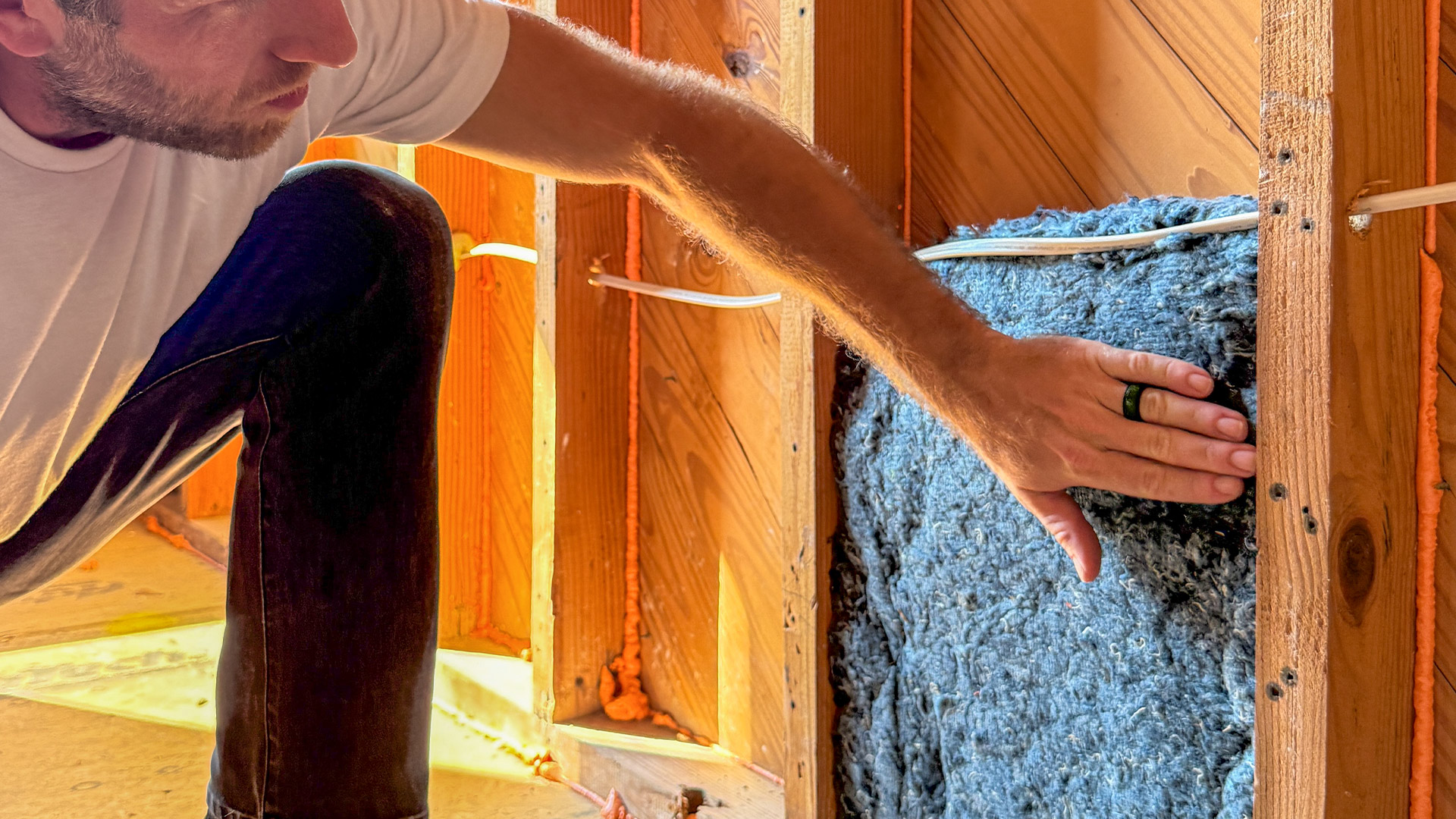
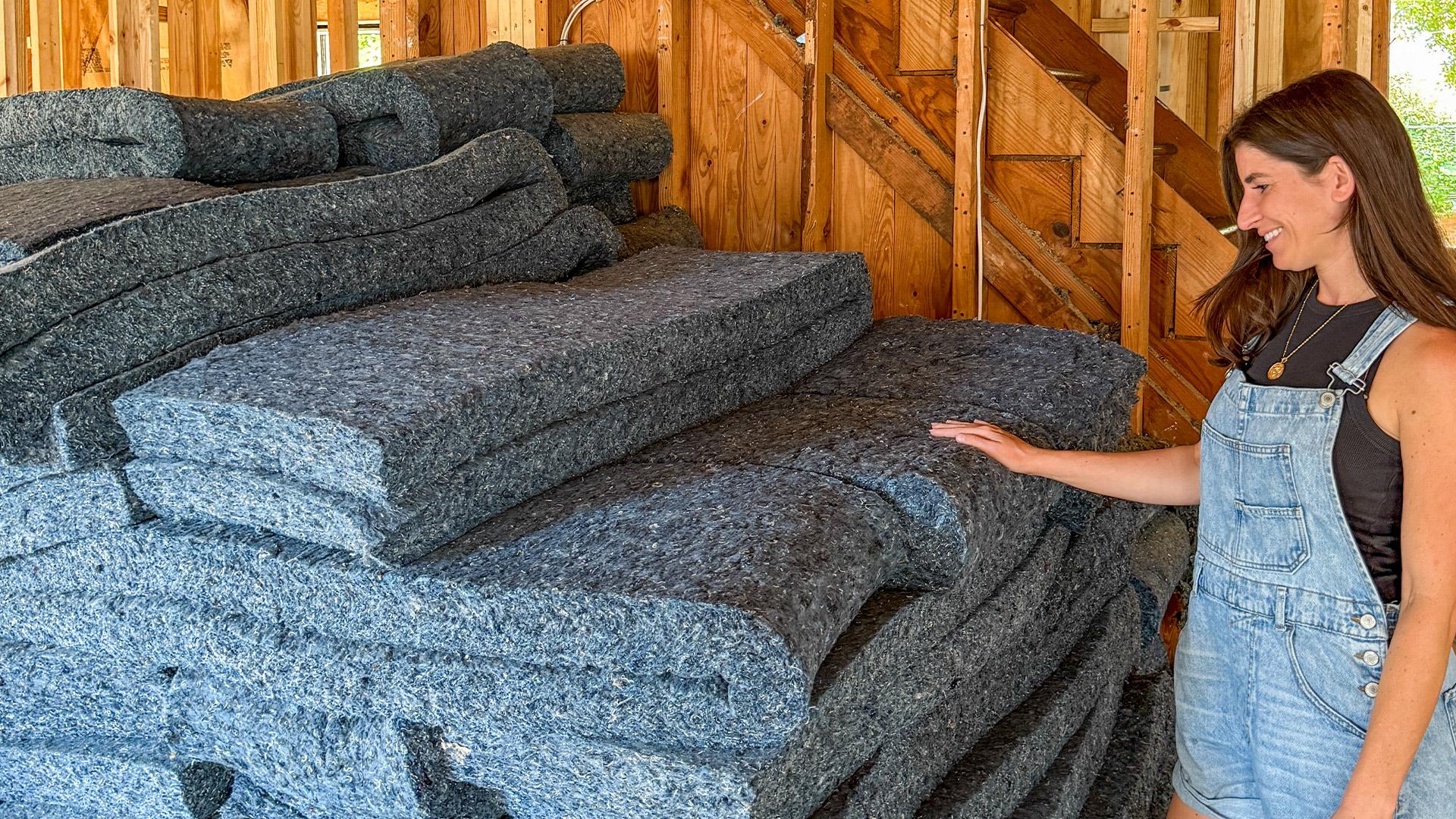
Denim insulation delivers performance without the chemical tradeoffs of foams. Manufactured from post-industrial denim fibers, it diverts waste from landfills while creating a reliable, sustainable product. Quiet Denim avoids polyurethane foams and foaming adhesives, supporting a low-VOC installation environment. With an NRC of 1.05, a rating at the very top of the absorption scale, it absorbs sound exceptionally well, helping bedrooms, offices, and shared walls feel noticeably quieter.
Quiet Denim: The Foam-Free Insulation That Puts Health First
Quiet Denim stands out for handling and field performance.
- It’s safe to handle and easy to install.
- Its friction-fit design makes for an extremely simple install, pressing securely into framing cavities without chemical foaming processes.
- Once in place, it stays dimensionally stable and resists shrinkage or settling, which preserves thermal performance and acoustic absorption for decades.
These qualities position Quiet Denim as one of the most effective free foam insulation solutions available to builders today.
Thermal and Acoustic Performance in Practice
Denim insulation provides dependable thermal resistance, but its clear differentiator is sound control. Its fiber matrix and density architecture soak up a broad range of frequencies that commonly travel through homes. That makes it especially useful for interior walls, such as bedrooms, nurseries, home offices, and multifamily walls. For contractors tasked with reducing corridor noise in apartments or sound bleed in open-plan areas, specifying denim delivers measurable results without resorting to chemical foam systems.
Key Benefits of Choosing Foam-Free Insulation
The benefits of denim insulation extend across jobsite workflow, long-term comfort, and sustainability.
Installation Efficiency and Safety
Quiet Denim simplifies the installation process compared with spray foam.
- Contractors do not need sprayer rigs, special respirators, or vacated homes to complete the work, which keeps schedules predictable and costs under control.
- Crews cut and place the batts using standard tools, and families can remain in place during the project with minimal disruption.
This combination of straightforward handling and safe working conditions makes denim insulation a dependable choice for both remodels and new construction.
Sustainability and Long-Term Responsibility
Denim insulation supports project sustainability targets. Its recycled fiber content reduces landfill waste and embodied carbon.
- By sidestepping chemical blowing agents, it avoids global-warming-potential impacts associated with many foam formulations.
- Denim insulation supports green building goals and may help projects pursue LEED or other sustainability credits, aligning with client expectations.
Together, these qualities place free foam insulation like Quiet Denim at the forefront of healthier, more sustainable construction.
Where to Use Foam-Free Insulation in Your Home

Denim insulation adapts easily to a variety of settings, both new construction and remodels, and it integrates cleanly with standard framing practices.
Interior Walls and Between Floors
In interior walls, installing free foam insulation in the form of denim batts cuts down on noise transfer between bedrooms, bathrooms, and family rooms, improving privacy and comfort. Between floors, it dampens footsteps, appliance vibration, and conversation, an important feature for home offices, studios, and rental apartments.
Kitchens and Utility Rooms
Kitchens and utility rooms often benefit from added acoustic comfort since these areas generate steady background noise. Quiet Denim fits standard framing cavities and helps soften sounds from appliances, plumbing, and daily activity, supporting a more comfortable flow throughout the home. Its dense cotton fibers press securely into place, making it a practical choice for both new builds and remodels in these busy zones.
Remodels, Retrofits, and Historic Homes
Remodels and retrofits highlight denim’s strengths. Crews can install the batts with the same tools used for framing and drywall, eliminating the need to coordinate specialty foam crews. Historic renovations also benefit, since denim can be placed in existing cavities without altering architectural details. From nurseries to multifamily corridors, denim brings healthy, free foam insulation performance to diverse project types.
Choose Insulation That Supports Long-Term Wellness
Spray foam remains an option, but builders and homeowners increasingly prefer materials that balance health, comfort, and sustainability. With alternatives like Quiet Denim, Projects achieve effective sound absorption, dependable thermal resistance, and a low-VOC installation profile
- Families gain confidence that walls and ceilings contribute to wellness instead of undermining it.
- Contractors get a product that installs cleanly and performs consistently.
Quiet Denim demonstrates that homeowners have thoughtful options beyond spray foam for achieving quiet, comfortable, and sustainable spaces. When planning a build or renovation, it can be worthwhile to explore insulation choices that align with both comfort and indoor-air goals.
Learn More About Denim Insulation or Get a Quote Today
Quiet Denim combines recycled content, superior sound absorption, and safe handling in one effective product. It helps homeowners create healthier living environments while giving builders a stable, sustainable material that installs without chemical tradeoffs. Contact us today for more information.