Basement ceilings create challenges many homes ignore. They affect comfort, energy use, and the movement of noise between floors. Choosing the best insulation for basement ceilings ensures the basement remains functional, comfortable, and safe while the upper floors benefit from quieter, more efficient living conditions.
What Type of Insulation Is Best for Basement Ceilings?
Several factors determine the right choice for a basement ceiling, and each influences performance differently.
Soundproofing
Basements often sit below main living areas where footsteps and voices create constant disturbance. Insulation that absorbs airborne noise and dampens vibration keeps the basement quieter while reducing disruption upstairs.
Thermal Regulation
Conditioned basements need insulation that separates thermal zones to control heating and cooling loads. Unconditioned basements, by contrast, benefit from insulation that buffers the living space above from drafts and temperature swings.
Moisture Resistance
Below-grade environments are prone to humidity and condensation, which quickly cause mold or mildew if insulation fails. Materials must resist moisture intrusion to maintain performance over time.
Sound Control and Installation: Why It Matters and How to Do It
Basement ceilings are key to minimizing noise transfer between floors. Foot traffic, voices, and appliance hum can all travel upward or downward, disrupting both basement and main-level comfort. That disruption is especially noticeable in finished basement spaces where peace and quiet matter, such as home theaters, offices, or guest rooms.
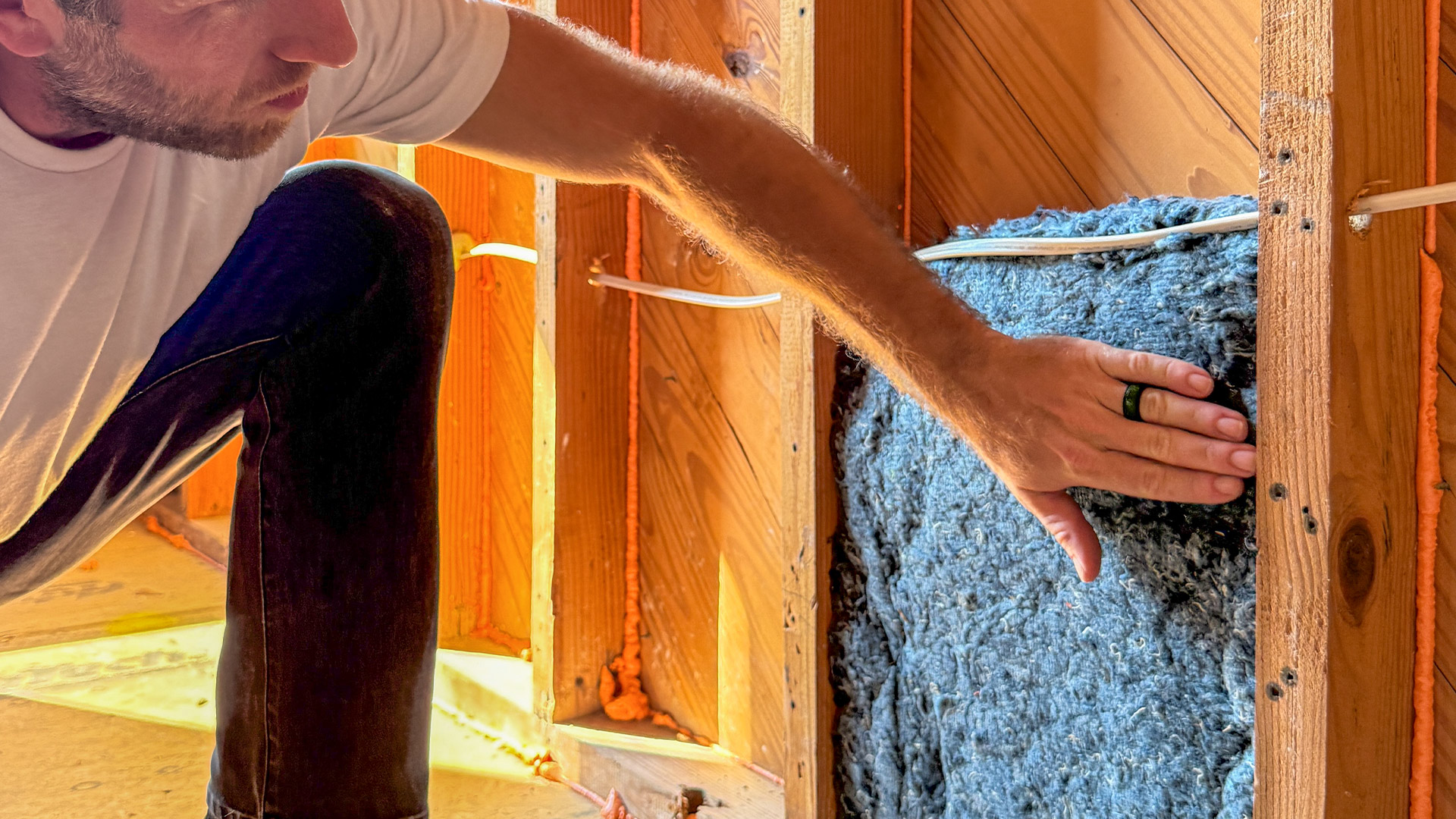
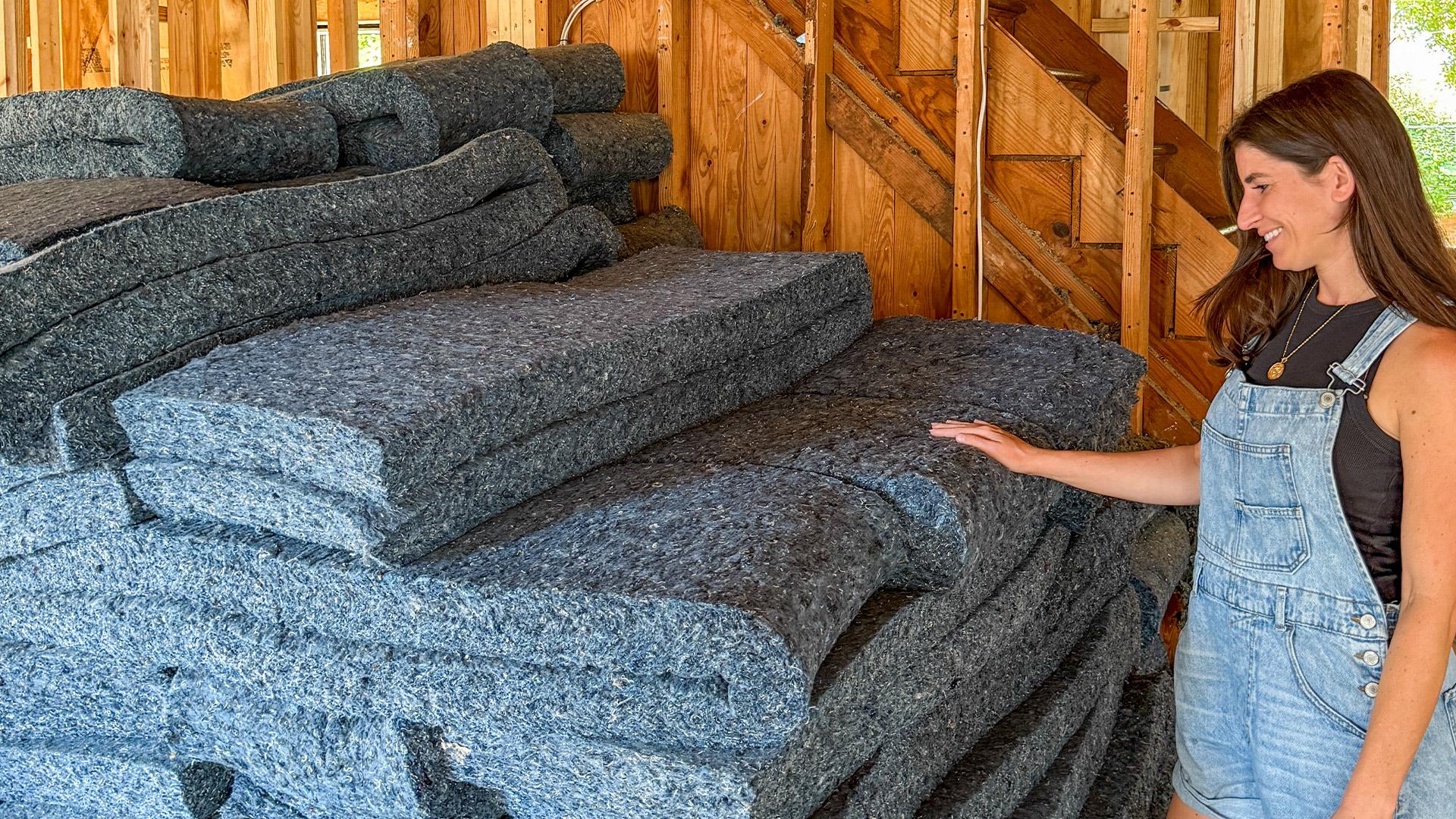
The most effective way to control this noise is with insulation that absorbs airborne sound and reduces vibration. Quiet Denim provides strong acoustic absorption with an NRC rating of 1.05, helping to soften airborne sounds like conversation and background hum in basement ceilings. Its high absorption performance creates a noticeably quieter, more comfortable environment overall. Made from post-industrial recycled denim, it is formaldehyde-free, low in VOCs, fire rated, and resistant to mold and mildew growth.
Installation is equally important. Quiet Denim’s friction-fit design makes for an extremely simple install, and it’s safe to handle and easy to trim around plumbing, ductwork, or wiring. Contractors and DIY renovators can fit it snugly into joist bays with a friction-fit design that doesn’t require additional fasteners. For maximum performance in finished basements, pairing Quiet Denim with acoustic ceiling tiles creates a layered barrier that keeps both the basement and the main level quiet and comfortable.
Top Insulation Option for Basement Ceilings
Among available products, cotton batt insulation such as Quiet Denim is an effective option for basement ceilings because it delivers:
- Sound absorption
- Safety
- Sustainability in one package
Its dense recycled denim fibers help lessen the impact of footsteps and soften airborne sounds like conversation and background noise that move between floors, making it a strong choice for both finished and unfinished basements. Made from post-industrial recycled denim, it also supports sustainable building goals while avoiding the irritation and mess of fiberglass or cellulose.
Quiet Denim is safe to touch, formaldehyde-free, and low in VOCs, which helps maintain healthy indoor air quality. Its friction-fit design makes for an extremely simple install, and it trims cleanly around plumbing, wiring, and ductwork without adhesives or protective gear. For long-term comfort in finished living areas or added quiet in utility spaces, Quiet Denim delivers acoustic control, sustainability, and easy installation, outperforming other insulation types.
Tips for Choosing the Right Material
Several practical factors, from how the basement will be used to accessibility, safety codes, and even appearance, should guide your insulation choice.
How the Basement is Used
A basement designed as living space demands high levels of comfort and soundproofing, while storage or utility areas may only need basic coverage.
Access to Pipes and Ductwork
Basements often house plumbing, ductwork, and electrical lines. Choosing an insulation that can be trimmed or temporarily removed for service saves headaches later.
Fire Code and Vapor Barrier Needs
Fire code requirements must be respected, particularly around mechanical systems, and in many cases a vapor barrier is needed to protect against condensation.
Aesthetic Impact
If a basement ceiling stays open, the look and finish of the insulation affect the room. In finished spaces, combining acoustic insulation with sound-dampening tiles produces a system that blocks and absorbs noise together.
Installation Tips for Basement Ceiling Insulation
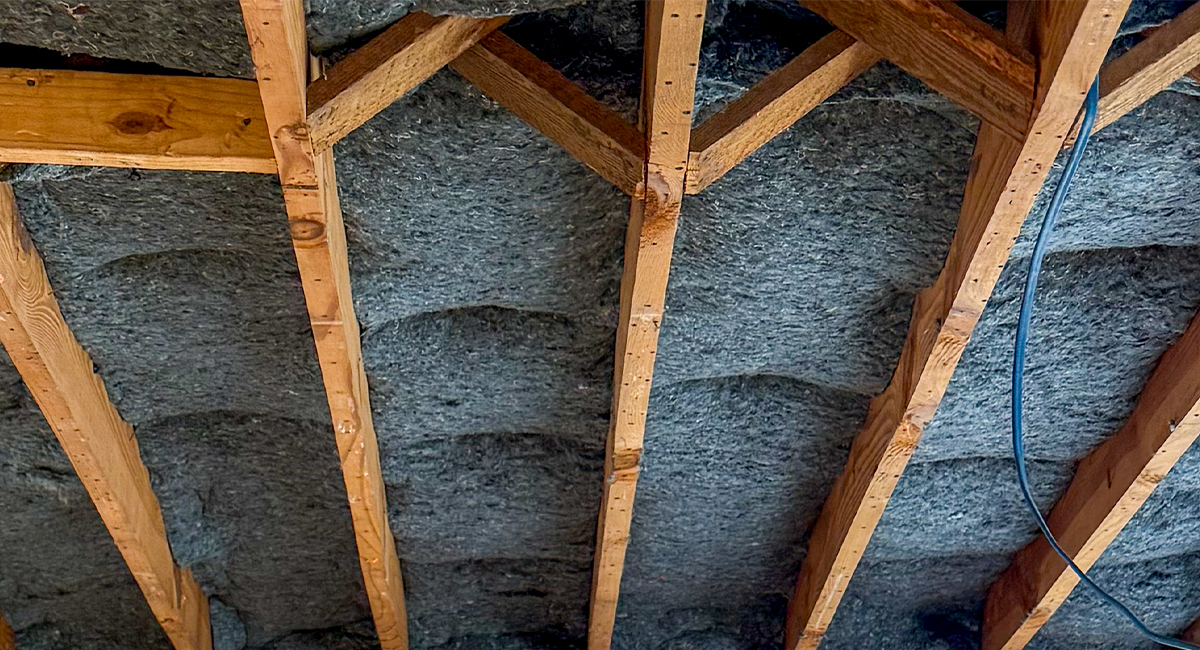
Quiet Denim is designed for straightforward installation, but following best practices ensures long-term performance.
- It friction-fits easily into open joist bays with no adhesives, protective gear, or complex tools required, and its clean surface makes it safe to touch throughout the process.
- The batts trim cleanly around pipes or other obstructions, which makes them well suited for DIY basement upgrades.
- In open ceilings, sections should be stapled or otherwise secured so they stay tight in place.
- Installers should avoid compressing insulation around wiring and maintain required clearances around heat-producing fixtures, following local code and manufacturer guidelines.
- For finished spaces, combining Quiet Denim with sound-dampening ceiling tiles adds another layer of acoustic protection.
- On projects where maximum sound control is required, builders can take performance even further by decoupling floors to limit vibration transfer between levels.
Choose Insulation That Performs Without Compromise
The right basement ceiling insulation should deliver reliable performance, ensure safety, and improve comfort on every floor of the home. Homeowners who settle for cheaper or less durable options often face callbacks, rising utility bills, or noise issues that undo the investment in a finished basement. Quiet Denim insulation strikes the right balance, offering acoustic control, sustainability, and a DIY-friendly design. Contact us today for a quote and learn more about using Quiet Denim in your basement insulation project.